
 17 June 2026
  15 min
  317 views
 At almost every major iGaming event I attend, I hear the same argument — both in informal conversations and during panel discussions: North America and Europe are already too regulated, too competitive, and too expensive to offer real growth.
The logic sounds reasonable. The largest brands are already there. Acquisition costs are high, compliance is demanding, and players have seen almost every product mechanic the industry can offer.
So the conclusion seems obvious: if an operator wants meaningful expansion, it should look to Latin America, Africa, or Asia, where regulation is still forming and growth rates look much higher.
I understand why this argument is attractive. But I think it confuses acquisition friction with market exhaustion. Mature markets are harder to grow in, yes. That does not mean they have stopped growing. And this article will not only explain why, but also show how operators can still find growth there.
Are Emerging Markets Really Growing That Fast?
Emerging markets are often presented as the obvious answer to slower growth in mature regions. And to be clear, their growth is real.
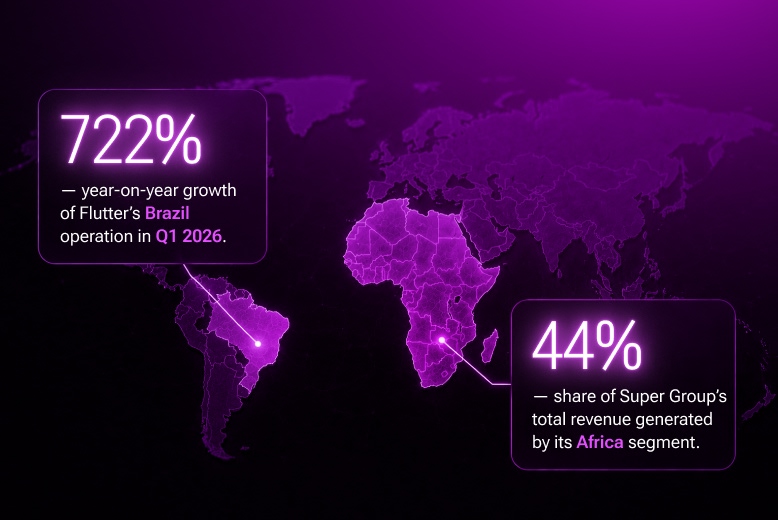
Brazil is one of the strongest examples: Flutter’s Brazil operation grew by 722% year-on-year in Q1 2026. Africa is also gaining momentum, with Super Group’s Africa segment growing by 33% and reaching 44% of the group’s total revenue.
But the question is not whether these markets are growing. The question is what kind of growth we are seeing.
In many developing regions, online gambling did not appear only after regulation. Players were already there. Demand was already there. Money was already moving through offshore, black-market, or grey-market platforms. Regulation simply makes this activity more visible, measurable, and taxable.
So when a newly regulated market shows rapid growth, part of that growth may be real expansion. But part of it may also be channelization: players moving from unlicensed platforms to licensed ones.
This makes direct comparisons with mature markets risky. Mature markets have been measured for longer, so their growth often looks less dramatic. Emerging markets may seem to explode from zero, while in reality they are partly bringing existing demand into the legal economy.
That does not make emerging markets less attractive. It only means they are not a magic shortcut. New geographies still bring new licensing, compliance, payment, localization, and marketing challenges.
So before assuming that growth is only somewhere else, operators should ask a different question: are mature markets truly exhausted, or are we simply failing to reach new player segments inside them?
Are Mature Markets Really Oversaturated?
The idea of mature market saturation sounds convincing because it describes real pressure. In Europe and North America, operators do face expensive acquisition, strict compliance, high player expectations, and stronger competition. But pressure is not the same as exhaustion.
The US is a clear example. In 2025, iGaming revenue reached $10.74 billion, growing by 27.6% year-on-year. This happened across only seven regulated states, with no major nationwide expansion behind the number. In other words, growth came not only from new market openings, but from deeper development inside already regulated states.
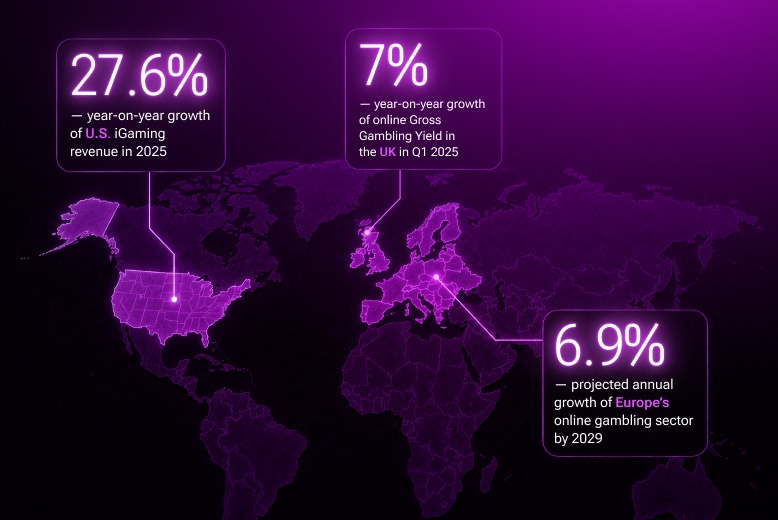
The UK tells a similar story in a different way. It is one of the oldest and most regulated online gambling markets in the world. Yet UK Gambling Commission data showed online Gross Gambling Yield growing by 7% year-on-year in Q1 2025, with slots up 11%.
Europe is also too diverse to describe as one saturated market. Some countries are under heavy regulatory pressure, while others are still growing, opening, or restructuring. The European online gambling sector is forecast to grow at 6.9% annually and reach €66.8 billion by 2029.
So when people say mature markets are saturated, they often mean something more specific: the old growth model is saturated. Competing through higher bonuses, aggressive CPA campaigns, and similar product portfolios is becoming harder and less profitable. It means operators need to find new reasons for players to stay, return, and spend.
Mature markets may no longer reward simple expansion. But they can still reward better products, smarter segmentation, and experiences that reach players the current offer does not serve.
How Operators Can Still Grow in Mature Markets
If mature markets feel saturated, the problem may not be the market itself. It may be the product offer.
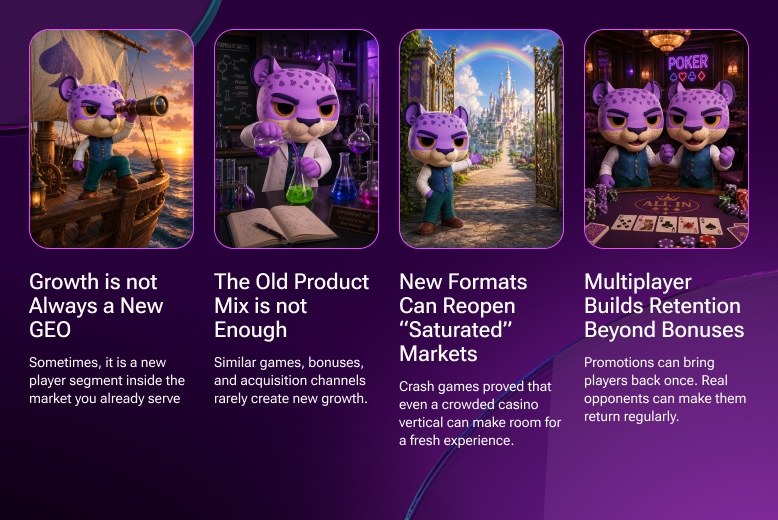
For a few years, growth in iGaming was often associated with geography: enter a new country, get a new license, localize the platform, and compete for a new audience. This approach still matters. But in mature markets, operators can also grow by reaching new player segments inside the markets where they already operate.
Shift From Geographic Expansion to Segment Expansion
The usual question is: where can we find new players? But for mature markets, a more useful question may be: which players are we not serving yet?
Many casino and sportsbook operators already have traffic, brand awareness, payment infrastructure, and a regulated setup. What they may not have is a product offer that covers different player motivations.
Some players come for quick solo entertainment. Others want competition, social interaction, rivalry, or a sense of progress. If the platform is built mainly around slots and short RNG-based sessions, it may serve one audience well while leaving another almost untouched.
This means the growth opportunity may already be inside the operator’s existing market. It is not always a new country. Sometimes, it is a new player segment.
Expand the Product Line Beyond the Dominant Vertical
Mature markets often feel saturated because many operators compete with very similar products. The same core verticals, the same bonuses, the same acquisition channels, and often the same suppliers. In this situation, adding more of the same rarely changes the growth curve.
To attract new players and give existing users a reason to return, operators need to bring something genuinely different into the product line. Not necessarily a completely new business model, but a new product layer with its own rhythm, mechanics, and emotional appeal.
The online casino market has already shown how this works. Not so long ago, it seemed that everything revolved around slots. The category looked crowded, highly competitive, and largely divided between the leading studios and operators. For many companies, it could have seemed pointless to challenge such a mature vertical.
Then crash games entered the scene and quickly carved out a strong niche of their own. They did not replace slots. They expanded the casino experience by offering something different: faster rounds, simple mechanics, visual tension, and a sense of shared excitement. The key lesson is that even a market that looks fully occupied can still create room for a new format if that format matches changing player expectations.
Use Multiplayer Mechanics to Improve Retention
Many casino products are solitary by design. A player opens a game, spins, and leaves. If they return, it is often because of a promotion, bonus, or reminder campaign. Multiplayer changes this dynamic.
When players compete against other people, the reason to return becomes more emotional and more social. It can be rivalry, habit, community, status, or the simple desire to try again against real opponents.
This creates a retention mechanism that bonuses alone cannot provide. Promotions can bring a player back once. A strong multiplayer experience can give them a reason to return regularly.
Poker as the Next Growth Driver for Online Casinos
For a long time, online casino operators had good reasons to keep poker at a distance. Poker existed in its own environment, with its own audience, product logic, and operational requirements. It was not simply another game to add to the lobby. It often meant a separate poker room, a separate user journey, a separate management team, and a completely different retention model.
This is why poker was often treated as a vertical for specialists, not as a practical growth tool for online casinos. But this view is becoming outdated. Modern poker can become a social, competitive, and accessible layer inside the casino product itself.
And this is exactly why online casinos are starting to look at poker differently. It can help solve three problems at once: add a new product experience without heavy operational pressure, give players a faster and more casual form of competition, and bring social interaction into an environment that is still too often built around solitary play.
Technology Readiness for Online Casinos
Modern poker products can be integrated directly into the casino lobby, so the player starts the game with one click, just as they would launch any casino title. This allows online casinos to offer something new without forcing their audience into an unfamiliar expert-only environment.
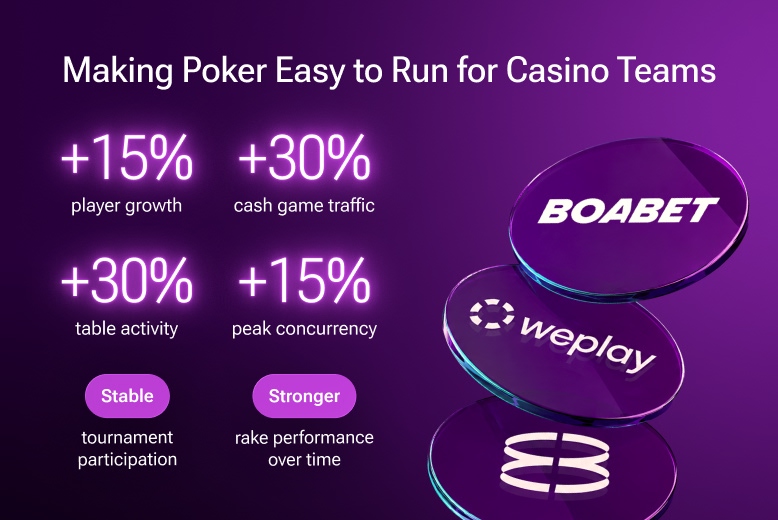
Joining a poker network can significantly reduce the operational burden. In some cases, all key poker operations can be managed by a very small team. The BoaBet case shows that a poker direction can be handled by one person when the product, network, and operational setup are built correctly.
Social Interaction
Modern poker is not limited to chat at the table. It allows players to communicate on several levels at once.
- Emotional level. Players can use emojis to react instantly to what is happening in the hand: surprise, frustration, confidence, irony, or excitement. This makes the table feel more alive and helps players express themselves even in fast sessions.
- Meme level. Some poker products include animated throwables that turn reactions into small pieces of entertainment. A player can throw a fish at an opponent, commenting on their level of play, or send an “acting award” after a successful bluff. These details may look playful, but they create memorable moments and strengthen the social rhythm of the game.
- Level of recognition. In poker, recognition happens directly at the table. When a player reads the situation correctly, plays their hand brilliantly, and takes the pot, everyone sees it immediately. The move becomes part of the table’s shared experience and can trigger reactions from other players: respect, frustration, surprise, or the desire to challenge them in the next hand.

A large share of players come back every day not only because they want to win, but because they want this social experience. For slots and many other casino games, operators have to invent social mechanics from scratch. In poker, social interaction is already part of the product’s nature.
Casualization
Modern poker products can deliver a fast, bright, and accessible experience similar to what players expect from other iGaming verticals. This affects both session length and the balance between skill and chance.
Not every player can spend several hours in a tournament. In fact, most recreational players cannot. They are used to a broader iGaming trend: fast games, short sessions, quick decisions, and immediate entertainment. Poker is evolving in the same direction.
The market already offers products built around faster formats, where players can get the core excitement of poker without committing to a long tournament or a complex session. This makes poker more compatible with the habits of casino and betting audiences, who often expect the experience to be quick, clear, and easy to enter.
Casualization also means making poker less intimidating for non-professional players. The market already offers formats and features that prevent experienced regulars from completely dominating recreational users. These mechanics give casual players a real chance to enjoy the taste of victory, even if they do not know what expected value, outs, or advanced poker strategy mean.
This does not make poker less valuable. It makes it more accessible. Classic poker still has its audience, but faster and more dynamic formats help the vertical speak to casino and betting players who want action, clarity, and entertainment from the first session.
Conclusion
The growth gap between emerging and mature iGaming markets may be less dramatic than it seems. Emerging regions are expanding fast, but part of that growth often comes from regulation and channelization, not only from new demand. Mature markets may look less explosive, yet many continue to grow steadily.
So geographic expansion is not the only answer. Online gambling still has strong potential for growth in depth: through diversified products, stronger retention, social mechanics, personalization, and new experiences for players already within reach.
The market is clearly getting tired of identical products, identical mechanics, and identical reasons to return. The future belongs to operators who understand this shift and are ready to make the player experience more diverse, more social, and more engaging.