
 30 July 2026
  14 min
  246 views
 Building a large commercial digital product often feels like scouting a path through a dense forest without a complete map.
A scout learns to read the smallest signals: a distant sound, a movement in the undergrowth, a subtle shift in the air. Product teams do something similar. We watch for changes in user behavior, emerging interaction patterns, unexpected client requests, and technologies that are only beginning to become viable. Each signal offers a clue about what may lie beyond the visible path.
This matters because product development moves more slowly than the world around it. Even a single feature takes time to design, test, build, and release. By the time it reaches users, the market may already have changed. Product teams therefore need to think slightly ahead of the present. A feature should answer not only today’s need, but the need that will exist when the work is complete.
The same challenge becomes far greater when we think about long-term product roadmaps. Strategic decisions made today may shape the product years from now. At that scale, observation is no longer enough. You need a degree of foresight.
This article is my attempt to climb the tallest tree in that forest and look beyond the immediate surroundings. From the perspective of product design, I want to reflect on the signals already visible in online poker and consider what kind of product they may be leading us toward.
The Poker of the Future Is Immediate
Casino games, mobile games, and streaming platforms give users almost immediate access to content. Poker often still requires several screens and decisions before the first hand. Reducing this path to one or two actions is becoming a basic product design priority.
This direction matters for every player segment. Casual players need a clear entry point without having to understand poker room structures in advance. Regular players also expect efficient navigation, relevant filters, and interfaces free from redundant information. Experience changes the controls a player needs, not their preference for good UX.
The same principle applies to operators. Simplified poker products are easier to launch and manage for teams that do not need hundreds of detailed settings. More advanced configurations remain necessary for established poker rooms, but they should be organized around actual workflows rather than the technical structure of the platform.
The poker of the future brings players to the first hand faster and operators to the right tools with less effort. Its complexity remains, but unnecessary friction does not.
The Poker of the Future Is Connected
Poker is increasingly becoming part of a broader entertainment ecosystem.
Operators now build campaigns around major sports events, seasonal themes, missions, loyalty systems, casino games, prediction mechanics, and social activities. Poker already joins the same flow instead of remaining behind a separate lobby and a separate communication strategy.
This changes how the product is designed. A poker session may begin with a mission in a sportsbook, continue through a tournament, and lead into another activity within the same platform. The player sees one connected experience rather than several unrelated verticals.
The same logic is visible among poker-focused operators. Collaborations, shared events, progression systems, and mechanics borrowed from mobile games are becoming more common. Even products built for regular players now use onboarding, missions, and personalized engagement tools that once seemed foreign to traditional poker.
This does not make poker less distinct. Its social and competitive core remains intact. Connection simply gives that core more entry points and more reasons for players to return.
The poker of the future will not live in isolation. It will move naturally between games, events, communities, and platforms while preserving the qualities that make poker worth returning to.
The Poker of the Future Is Easy to Customize
Every popular online game now lives through seasons, events, collaborations, and visual updates. Players have endless alternatives, so a product that looks and feels the same for too long inevitably starts to lose their attention.
For poker operators, keeping the experience fresh has traditionally required close coordination with the provider. Even a new table theme could involve design preparation, technical implementation, testing, and release planning. This increased the workload on both sides and made spontaneous campaigns difficult.
The industry is moving toward a simpler model: operators receive direct control over the visual environment. Instead of requesting each update from the provider, their teams can change tables and tournament themes through the back office.
Our Custom Table Collections feature is one example of this approach. An operator can upload prepared assets and launch seasonal, branded, or promotional tables without involving the provider’s development team.
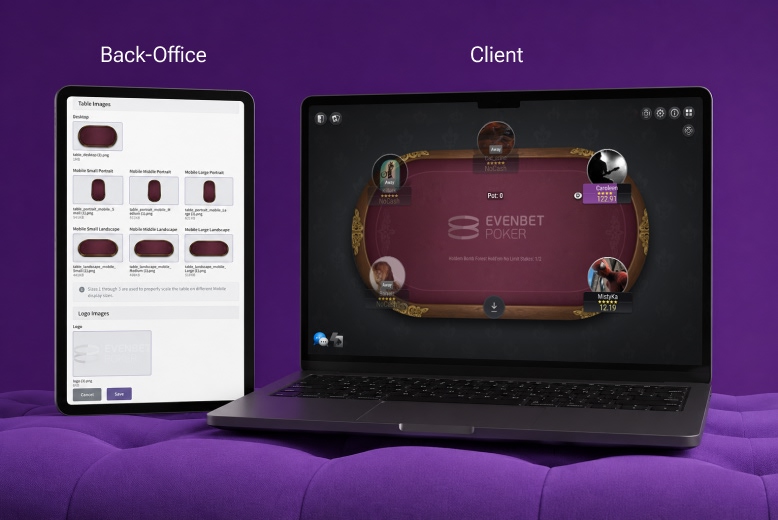
In practical terms, a table concept discussed at the beginning of the working day can go live before lunch, provided the visuals are prepared and approved quickly. This gives operators room not only for long-term seasonal planning, but also for immediate reactions to current events, collaborations, and cultural moments.
In a world where a new meme or news story can capture an audience overnight, visual customization cannot remain a lengthy development project. The poker of the future gives operators the ability to reshape the experience while the moment still matters.
The Poker of the Future Is Adaptable
There is no single model for the future of online poker.
Operators work across different markets, audience segments, business models, and stages of development. A configuration designed for a mature poker room may be excessive for a casino testing the vertical. The same product may also need to reflect very different player habits in Europe, Latin America, Africa, or Asia.
The role of the provider is therefore shifting from delivering a fixed product to providing a flexible technological foundation. Operators should be able to adjust game formats, interfaces, engagement tools, and operational depth without replacing the entire platform each time their priorities change.
This adaptability depends on a strong underlying system. Flexibility is useful only when different configurations remain coherent, manageable, and technically sustainable.
For operators, this means a shorter response time when entering new markets, addressing new audiences, or expanding the role of poker within an existing business. For providers, it creates longer and more productive relationships built around evolution rather than repeated migration.
The poker of the future will take many forms. Its technology should allow them to exist within the same product.
The Poker of the Future Is Human
Poker has always been a social game. Its tension comes not only from the cards, but from playing against other people and reading their reactions.
When poker moved online, much of this experience was reduced to avatars, betting controls, and statistics. Product design now moves in the opposite direction, giving players more ways to express personality, emotion, and status.
Profile customization is part of this shift. Avatars, visual themes, collectibles, and other identity elements help players make the digital space feel personal. The profile becomes more than an account. It becomes a visible part of how the player presents themselves within the community.
The same identity can also strengthen social trust. Open leaderboards, Recent Winners sections, and public tournament results turn anonymous activity into something players can recognize. They begin to notice familiar nicknames and avatars, meet the same people at the tables, and follow players with memorable histories or impressive results.
This visibility makes success feel more tangible. When players repeatedly see real members of the community winning tournaments or hitting high prize multipliers in formats such as Spins, these outcomes feel less abstract. The mechanics become easier to trust, and strong results can motivate others to keep playing and pursue similar achievements.
Interactive features serve the same purpose. Throwable Objects, reactions, animations, and table interactions transfer emotion from one screen to another. Their value lies less in the visual effect itself than in the moment of connection they create between players.
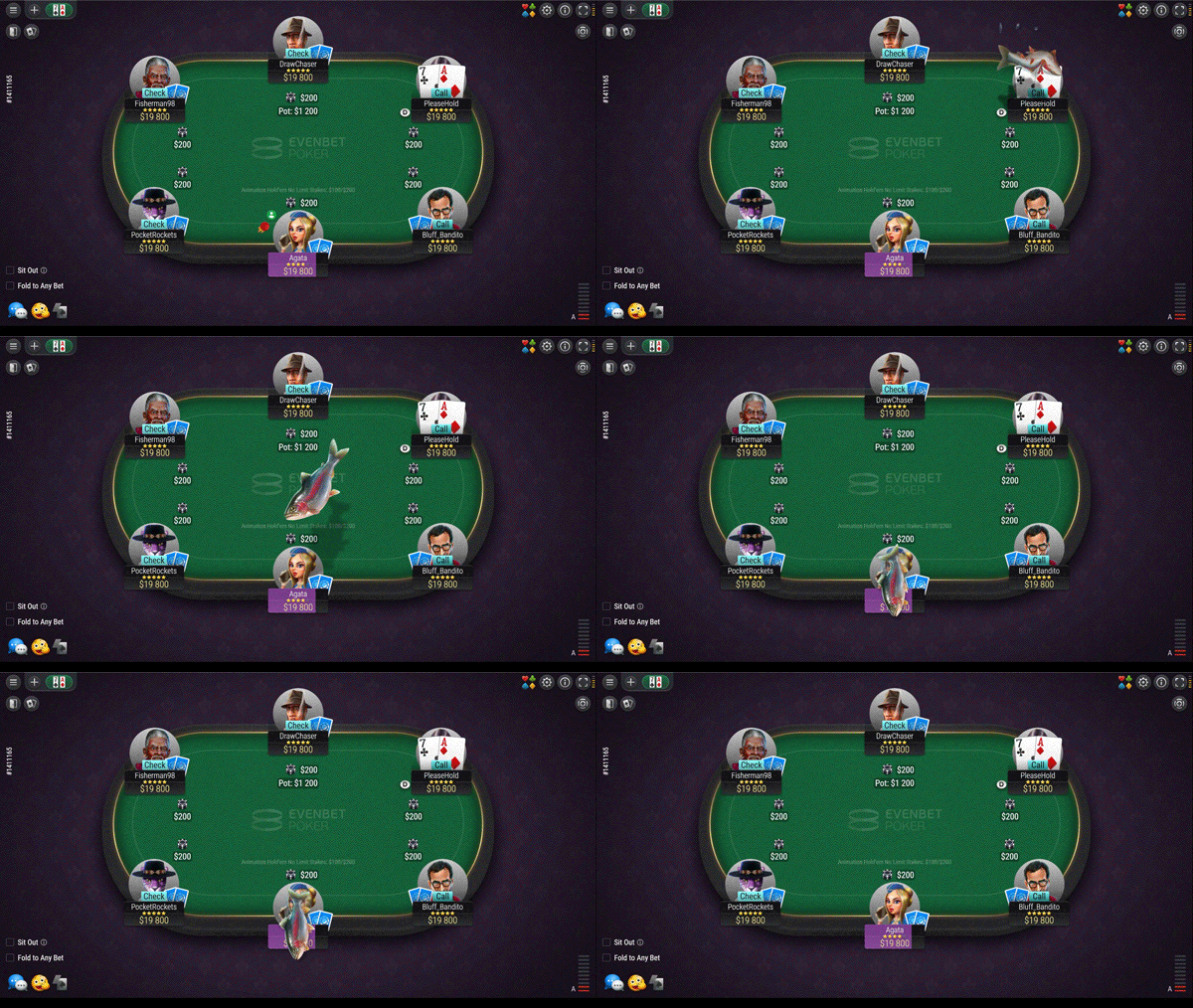
Casino and sportsbook products are actively adding social mechanics to improve engagement and retention. Poker already has human interaction at its core. Its future depends on making that interaction richer, more expressive, and more visible through design.
The poker of the future should feel inhabited. Players should not simply see opponents at the table. They should feel the presence of other people.
The Poker of the Future Is Lightweight
Online poker must remain accessible across different devices, connection speeds, and markets. A heavy client narrows the potential audience, which is especially critical for a product that depends on liquidity.
Performance is often treated as an engineering concern, but many technical limitations begin with design decisions. Complex animations, numerous assets, and unnecessary visual variations increase client size, device load, and development time.
This makes visual efficiency part of product design. Every effect should justify the resources it requires. The goal is to find forms of expression that remain stable on older smartphones and slower connections.
At EvenBet Gaming, for example, we use Spine animation instead of frame-by-frame animation. It requires fewer resources, reduces client size, and makes visual elements easier to customize. The player still sees movement and emotion, while the product remains lighter and easier to maintain.
A consistent design system supports the same goal. Reusable components and clear interaction patterns reduce implementation time and the risk of errors. They also make future development more predictable.
The poker of the future will become visually richer without becoming technologically heavier. Its design should create more emotion with fewer resources.
The Poker of the Future Is Hyperreal
Design trends are cyclical. Not long ago, skeuomorphism, with its imitation of metal, glass, and other physical materials, was replaced by minimalist flat design. Even automotive and premium brands, usually among the most conservative in visual identity, eventually followed this direction.
Now the movement is beginning to reverse. Users are becoming less willing to interpret abstract interfaces and more interested in controls that feel physical. Buttons, switches, textures, and familiar materials are gradually returning to digital design.
This is particularly relevant to poker because of its cultural history. Cinema and literature have long associated the game with a distinctive visual and sensory aesthetic. The feeling of presence matters: the player should almost be able to touch the felt through the screen.
Sound is equally important. The shuffle of cards and the sound of chips colliding remain essential even in radical reinterpretations of poker. Balatro, for example, is way different from a traditional poker room, yet it still preserves these familiar sensory signals.
This pursuit of presence also explains why VR casinos and poker rooms attracted so much attention five or ten years ago. Although they have not become mainstream as quickly as many expected, the thinking behind them was sound. Online poker continues to move toward a more immersive, material, and hyperreal experience.
Designing What Comes Next
The future of online poker will not be defined by one interface, one visual style, or one type of player. It will emerge from the product’s ability to change without losing the qualities that make poker recognizable.
For designers, this means working with tensions rather than following isolated trends. The product must evolve while remaining coherent, become more accessible without becoming generic, and create new forms of interaction without weakening the game’s identity.
This is why product design cannot be separated from technology, operations, or business strategy. Every visual and interaction decision affects how quickly the product can develop, how widely it can be distributed, and how naturally it can respond to new audiences and contexts.
The poker room of the future is therefore not a finished image waiting to be discovered. It is a system capable of continuous transformation, built around an experience that remains unmistakably human.