
 27 July 2026
  20 min
  267 views
 When we started building software for iGaming more than two decades ago, the industry was still taking shape. There were no established standards, no widely accepted best practices, and very few successful examples to learn from. Even those examples raised more questions than answers. Was this a model worth following, or simply a case of survivor bias?
We had no reliable playbook and no obvious source of correct answers. To find our place in the industry, we had to experiment, observe, and make decisions without knowing whether the market would eventually move in the same direction.
What we did have was experience from other fields. Our team had worked on CRM systems, messaging platforms, mobile games, and other digital products. That background helped us approach iGaming problems from different angles instead of limiting ourselves to the logic already forming inside the industry.
Today, EvenBet Gaming is one of the established leaders in iGaming software. We reached this position because we have always tried to think beyond existing boundaries and learn from every relevant industry, product, and business model.
This article explores several lessons iGaming businesses can take from casual mobile gaming, traditional retail, FMCG, and digital entertainment platforms. Some connections are obvious. Others are less so, which is usually where the most useful ideas are hiding.
Casual Mobile Gaming
iGaming has been moving toward more casual mechanics for years. At the same time, mobile devices account for an increasingly large share of player activity. This makes casual mobile gaming a natural source of inspiration for iGaming businesses.
Segment the Situation, Not Just Players
Most iGaming CRM systems classify players using relatively stable characteristics, such as VIP status, deposit size, preferred games, churn risk, and previous activity. This data is useful, but it does not tell the whole story. Human behavior is inconveniently more complicated than a neat CRM label.
Casual mobile gaming shows that the same person may need a completely different experience depending on the situation. A player rushing through an airport on Thursday morning is unlikely to want the same product they would choose while relaxing at home on Saturday evening. Even if the player profile remains unchanged, their available time, attention, and motivation may be completely different.
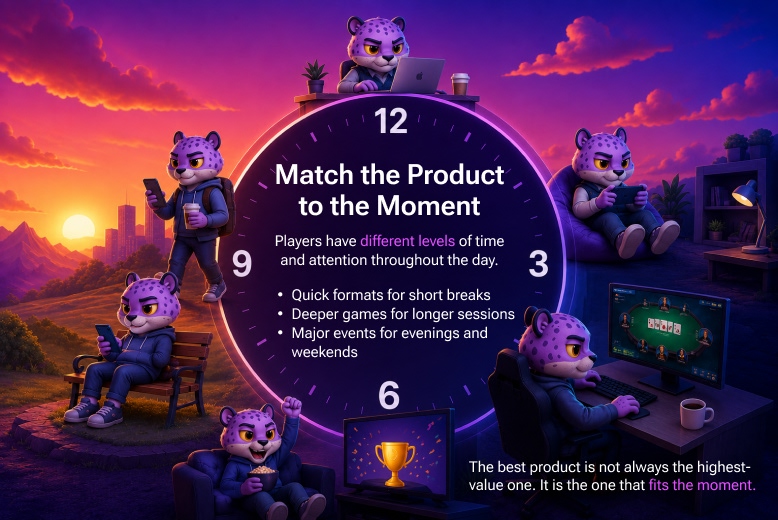
This means iGaming businesses should consider not only who the player is, but also the context in which they open the platform:
- How much time do they have?
- Which device are they using?
- Are they at home or on the move?
- How much attention can they give the game?
- What time and day are they playing?
- Are they ready for an immersive session or simply looking for a quick distraction?
This approach is often called situational segmentation. Instead of sending the same game or promotion to every player in a fixed category, operators can adapt their recommendations to the player’s likely real-time needs. The result is a more relevant experience, stronger engagement, and less marketing budget wasted on offers shown at the wrong moment.
Design Products for Micro-Sessions
Casual mobile games are built around short, clear actions. A player can open the app, complete a simple game loop, see a result, and leave after a few minutes without feeling that the experience was interrupted.
iGaming products can follow the same principle by offering:
- fast game formats;
- short tournaments;
- instant games;
- one-handed mobile experiences;
- mechanics with a short time to the first result;
- products that require little or no learning.
These formats do not need to replace longer, more immersive games. They serve a different purpose. A player with five free minutes has different needs from someone ready to spend an entire evening on the platform. Supporting both situations helps operators fit more naturally into players’ daily routines.
Reduce Inefficient Bonus Spending
A bonus shown at the wrong moment can be more than ineffective. It can also be expensive. The system spends a marketing budget on an offer that the player is unlikely to use, even though the problem may not be the value of the bonus itself. It may simply be a poor match for the player’s current situation.
For this reason, bonus optimization should consider:
- the likelihood that the player will start a session;
- the type of game that fits the moment;
- the expected session length;
- the player’s current readiness to engage.
This shifts bonus management from simply offering more value to offering the right incentive at the right time. As a result, operators can reduce unnecessary bonus exposure while making promotions more relevant and effective.
Traditional Retail
The connection between traditional retail and iGaming may seem less obvious than the link with casual mobile games. One deals with physical shelves and shopping carts, while the other operates through digital platforms and virtual products.
Yet retail offers some of the most useful lessons for iGaming businesses. Mature retailers have spent decades learning how to manage limited space, protect margins, guide customer behavior, and monetize traffic. Their experience shows why valuable business ideas often come from industries that appear to have little in common with your own.

Monetize the Digital Shelf
A supermarket does not make money only by selling products to shoppers. It also sells manufacturers access to customer attention. Eye-level shelves, checkout areas, end-cap displays, high-traffic zones, and promotional campaigns all have commercial value because they influence what people notice and buy.
The same principle applies to an iGaming lobby. Top banners, featured categories, recommendation blocks, and the first positions in a game catalog are limited digital spaces. Providers competing for visibility may offer operators:
- better revenue-share terms;
- exclusive content;
- joint marketing budgets;
- customized game versions;
- early access to new releases;
- guaranteed support for promotional campaigns.
This means the lobby should not be treated as a neutral catalog. It is a commercial asset that operators can actively manage and monetize.
However, monetization should never come at the expense of the player experience. A provider may offer attractive terms for premium placement, but the promoted game should still match the player’s preferences and behavior. Otherwise, the operator may gain a short-term commercial benefit while making the lobby less relevant and harder to navigate.
The goal is to find the right balance. Commercial agreements can influence visibility, but personalization and customer experience should remain the final filter for what each player sees.
Develop Private-Label Products
Retailers create private-label products to improve margins, reduce dependence on external brands, control pricing, offer exclusive products, and keep customers within their own ecosystem.
In iGaming, the same strategy can take several forms:
- in-house games;
- exclusive mechanics;
- acquired game studios;
- proprietary verticals;
- branded tournaments and game shows.
Owning more content gives operators greater control over margins, product development, and differentiation. It also creates experiences that competitors cannot easily copy or offer under the same conditions.
However, replacing too much third-party content can weaken the platform. Players may already know and actively search for certain games or providers, while a smaller catalog can make the overall offer less attractive.
Private-label content works best as a strategic addition, not as a reason to remove external suppliers at any cost. The aim is to strengthen the platform with exclusive products while preserving the variety and recognizable content that players expect.
Use Loss Leaders to Support the Wider Ecosystem
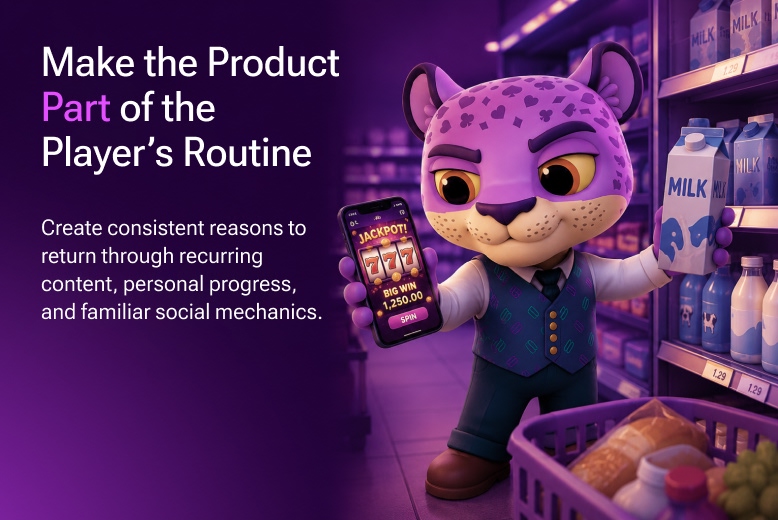
Retailers sometimes sell popular products at very low margins, or even at a loss, to bring customers into the store. The profit comes later, when those customers purchase other, higher-margin products. Humanity has apparently accepted that cheap milk can be a full customer acquisition strategy.
In iGaming, a loss leader could be:
- a game with a very high return to player (RTP);
- a product with zero or minimal commission;
- a free tournament;
- a social feature with no direct monetization;
- a low-cost entry product;
- an entertainment format designed to encourage repeat visits.
The value of such a product does not have to come from direct gross gaming revenue (GGR). It may instead reduce acquisition costs, build trust, increase time spent within the platform, introduce players to other verticals, and support future cross-selling.
The key is to evaluate performance at the ecosystem level. A product may look unprofitable in isolation, yet still create significant value by attracting players and guiding them toward other parts of the platform.
Turn the Platform from a Store into a Destination
Retail has evolved from specialized shops to supermarkets, department stores, and large shopping centers. A modern mall does not attract visitors with products alone. It also offers food, entertainment, events, social interaction, atmosphere, and reasons to spend more time there.
An iGaming platform can follow the same path. Instead of acting as a simple catalog of games, it can become a broader entertainment space where users can:
- play different types of games;
- watch streams;
- join tournaments;
- communicate with other players;
- follow live events;
- develop their profiles;
- earn achievements;
- participate in a community.
This changes the role of the operator. The task is no longer limited to offering individual games. It becomes about managing the full economy of digital space, traffic, content, and player journeys.
The strongest platforms give users reasons to stay, explore, and return even when they are not entering the app for one specific game. That is what turns a digital storefront into a real destination.
FMCG
The connection between Fast-Moving Consumer Goods (FMCG) and iGaming is more direct than it may first appear. Both industries compete for attention in crowded markets, depend on strong distribution, and need to make their products easy to recognize and hard to replace.
FMCG brands have spent decades learning how to create consumer demand, protect their position in distribution channels, and turn everyday products into familiar habits. For iGaming businesses, this offers valuable lessons in brand building, differentiation, and direct relationships with end users.
Build Demand Among End Users
Strong FMCG brands do not rely entirely on retailers to generate sales. They create direct consumer demand, so customers enter a store already looking for a specific product rather than choosing whatever happens to be available on the shelf.
Traditionally, many B2B iGaming providers remained almost invisible to players. The operator owned the customer relationship, while the supplier worked quietly in the background. This model is changing. Leading providers increasingly promote:
- specific game titles;
- recognizable characters;
- distinctive mechanics;
- tournaments and special events;
- the provider brand itself.
They build this visibility through streamers, social media, content creators, gaming communities, influencer campaigns, and branded events.
When players recognize and actively search for a provider’s content, the provider becomes more valuable to operators. Its games are no longer interchangeable products in a large catalog. They become a source of demand that can attract players and influence which platform they choose.
Avoid Becoming a Commodity
If players see little difference between two games or providers, an operator can easily replace one supplier with another. Competition then becomes focused mainly on price, commercial terms, and revenue share.
FMCG brands reduce this risk by creating recognizable assets that customers associate with a specific product. In iGaming, these may include:
- a distinctive visual style;
- a consistent player experience;
- recognizable game mechanics;
- original characters;
- connected game series;
- strong emotional associations;
- an active community around the product.
These elements make the product easier to recognize and harder to replace. A strong brand gives players a reason to choose a specific game or provider instead of accepting any generic alternative with similar mechanics.
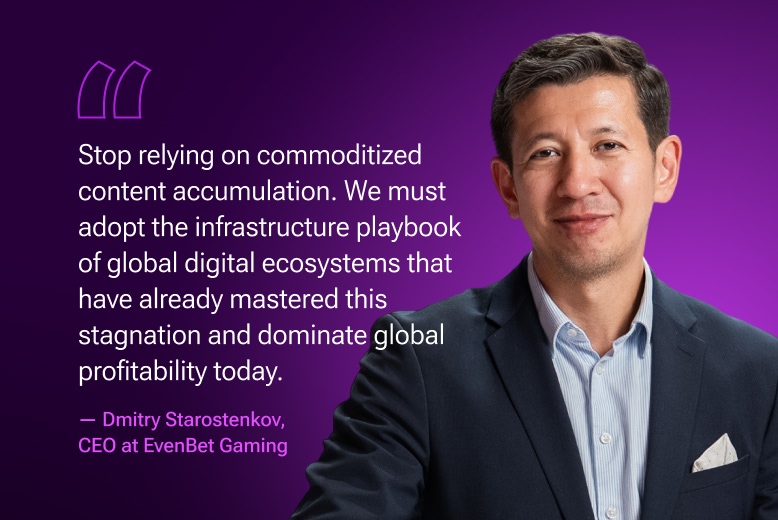
To break through the mature iGaming plateau,
The more distinctive the product becomes, the less likely it is to compete on price alone.
Digital Entertainment Platforms
The rise of digital entertainment platforms has changed the rules for many online industries. They have reshaped how people discover content, spend their time, interact with communities, and move between different forms of entertainment. iGaming businesses should study this evolution closely, because they are competing for the same limited share of users’ time.
Compete for Attention, Not Only for Bets
A player is not choosing only between two casinos. They are also choosing between a casino, a streaming platform, a mobile game, a social network, YouTube, a sports broadcast, or a podcast.
This means the real competitive resource is the user’s time. iGaming businesses are competing with the entire digital entertainment market, not only with other gambling operators.
For this reason, traditional performance metrics tell only part of the story. Operators still need to track deposits, bet count, gross gaming revenue (GGR), and conversion rates, but they should also measure:
- how often users return;
- how long they interact with the platform;
- how they move between different formats and verticals;
- whether they use community features;
- how they engage with streams, shows, and other non-gaming content.
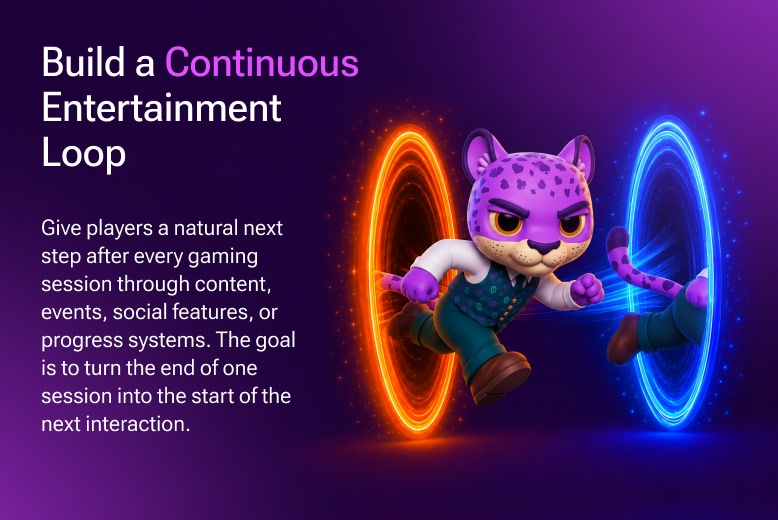
These signals show whether the platform is becoming part of the user’s broader entertainment routine. Winning attention can create more opportunities for gaming activity, cross-selling, and long-term retention than focusing on individual bets alone.
Extend Value Beyond the Core Service
Netflix began as a service for renting and streaming video, but gradually expanded into original content, games, live formats, and other forms of entertainment. Its value is no longer limited to one type of media.
An iGaming platform can follow a similar path by going beyond a catalog of betting products. This may include:
- live entertainment;
- streams integrated into the lobby;
- game shows;
- educational content;
- community events;
- social features;
- merchandise or digital collectibles;
- collaborations with well-known personalities.
This does not mean adding every possible format simply because another platform has tried it. New elements should support the wider ecosystem, fit the audience, and give users a clear additional reason to return.
The strongest extensions make the core product more engaging rather than distracting from it. Otherwise, the platform merely becomes a crowded menu, which digital businesses have somehow decided counts as innovation.
Invest in Your Own Attraction Drivers
Platforms should not depend entirely on paid acquisition, external campaigns, or third-party content to bring users back. They need their own strong reasons for people to visit.
These attraction drivers may include:
- exclusive shows;
- branded tournaments;
- well-known hosts or ambassadors;
- unique social mechanics;
- proprietary games;
- regular live events;
- an active player community.
Such assets give the platform something competitors cannot easily copy. They can also reduce dependence on bonuses and paid traffic by creating organic interest and stronger reasons to return.
The main lesson from digital entertainment is clear: an iGaming platform should do more than process gaming transactions. It should build a sustainable system for attracting, holding, and renewing user attention.
Look Beyond the iGaming Playbook
iGaming does not need to copy other industries directly. It can, however, learn from how they solve similar problems: rising acquisition costs, limited attention, margin pressure, and weak differentiation.
Casual gaming teaches situational relevance. Retail shows how to manage digital space and player journeys. FMCG proves the value of strong brands, while entertainment platforms demonstrate how to turn transactions into long-term engagement.
The strongest ideas may come from outside the industry. Operators that look beyond the usual iGaming playbook will be better prepared to build platforms players choose to return to.