
 10 April 2026
  11 min
  261 views
 Player acquisition in iGaming continues to rise, while retention remains the primary driver of long-term revenue. In this environment, formats that increase session frequency and repeat engagement become strategically critical.
Spins Poker addresses this shift by transforming poker from a session-based game into a sequence of short, repeatable interactions. Instead of relying on long play sessions, this poker software solution builds value through rapid cycles of entry, outcome, and re-entry.
The Retention Problem in High-Frequency iGaming
In modern iGaming, growth is increasingly constrained by retention. Players are easy to attract, but difficult to keep engaged over time.
Traditional poker formats rely on long sessions, delayed rewards, and a relatively high barrier to entry. As a result, they struggle to fit into the short, fragmented usage patterns that define mobile-first behavior.
At the same time, other formats, such as slots and crash games, have adapted to this shift by optimizing for speed, instant feedback, and repeatable engagement loops.
This creates a gap: poker retains strong monetization potential, but lacks formats that align with how players interact with modern iGaming products.
What is Spins Poker? Core Mechanics
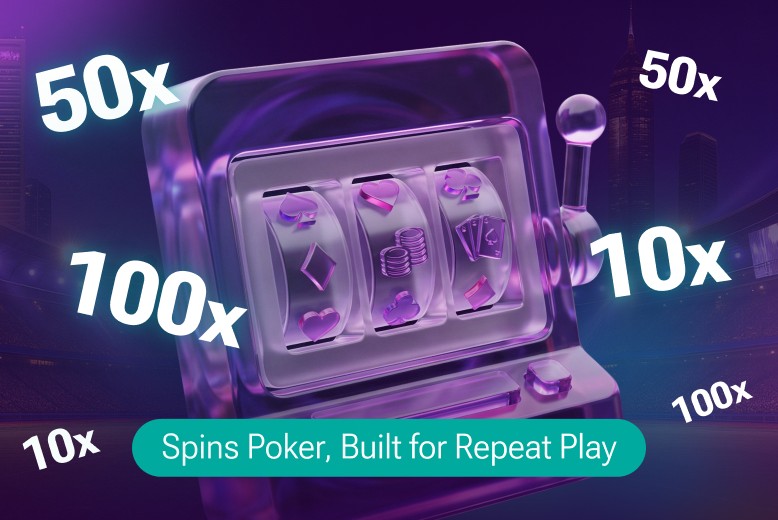
Spins Poker is a 3-player hyper-turbo tournament format where the prize pool is determined by a random multiplier (2x–1,000x) revealed before cards are dealt. It functions as a turnkey solution that allows operators to launch fast-format poker without building a full ecosystem from scratch.
Session structure:
- Fixed buy-in for three players
- Automatic seating with no table selection
- Multiplier reveal (wheel animation)
- Rapid blind progression (every 2–3 minutes) and shallow stacks
- Winner-takes-all (or tiered payouts at higher multipliers)
Each session is designed to last 5–7 minutes, aligning with mobile-first, short-attention usage patterns.
From Game to Event: The Spins Dynamic
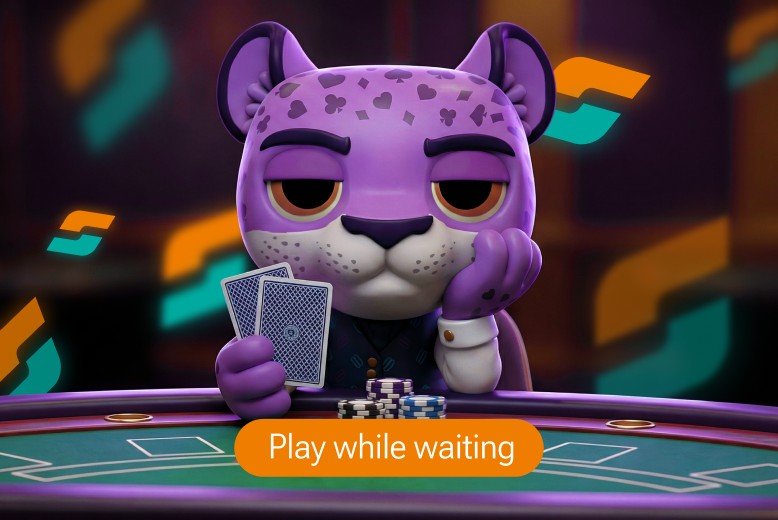
Spins Poker reframes poker from continuous play to discrete, high-intensity events.
Each session starts with a multiplier reveal, creating excitement before any gameplay decisions. Unlike slots/crash (algorithm-driven), Spins keeps real player-vs-player outcomes — the multiplier sets stakes, but results depend on table skill and decisions.
This creates clear start → peak → resolution cycles that encourage immediate re-entry, aligning with slot-like engagement patterns while preserving poker’s social competition.
Behavioral Drivers: Why Spins Increase Engagement
Pre-Game Anticipation
Each session begins with a multiplier reveal, introducing excitement before the first hand is played. This shifts the emotional peak to the start of the experience, creating a strong anticipation effect. Even before any decisions are made, players are already engaged, which increases the likelihood of immediate re-entry after the session ends.
Fast Resolution
Sessions deliver complete cycles in short time frames, compatible with everyday breaks and commutes. This makes the format compatible with everyday usage patterns, such as short breaks or commutes, and allows players to engage without committing to long sessions.
Compressed Skill Gap
Shallow stacks and rapid blind progression reduce the advantage of experienced players. While skill still matters, pace and variance play a larger role, making the format more accessible for casual users.
Natural repeat loop
Each session has a clear beginning, peak, and resolution. Once a game ends, players are immediately presented with the opportunity to enter a new session, often starting again with a multiplier reveal. This creates a natural loop of repeated engagement without requiring additional prompts.
From Sessions to Frequency: Economic Model
Spins change poker economics from session depth to entry frequency.
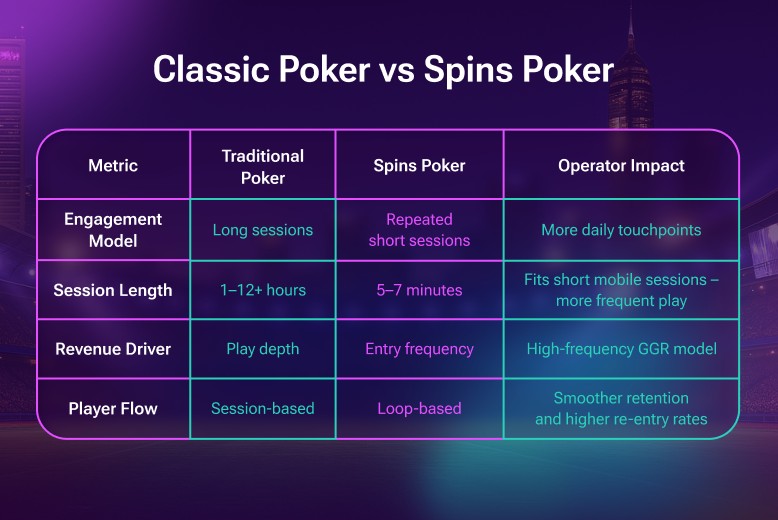
Individual sessions generate less rake, but total user value grows through sustained daily frequency.
Turnkey Setup for Liquidity and Instant Play
Spins Poker addresses one of the core operational challenges of traditional poker: liquidity fragmentation. In standard formats, players are often distributed across multiple partially filled tables, leading to wait times and inconsistent game availability.
The 3-player structure allows tables to fill almost instantly, without the need to gather larger groups of players. This significantly reduces entry delays and makes the experience more predictable.
At the same time, the flow between sessions is continuous. Players move directly from entry to multiplier reveal and into gameplay, and once a session ends, they can immediately join the next one without interruption.
As a result, Spins Poker creates stable engagement loops that are less dependent on peak traffic hours, supporting consistent activity throughout the day.
Player Behavior Patterns
Multi-session visits
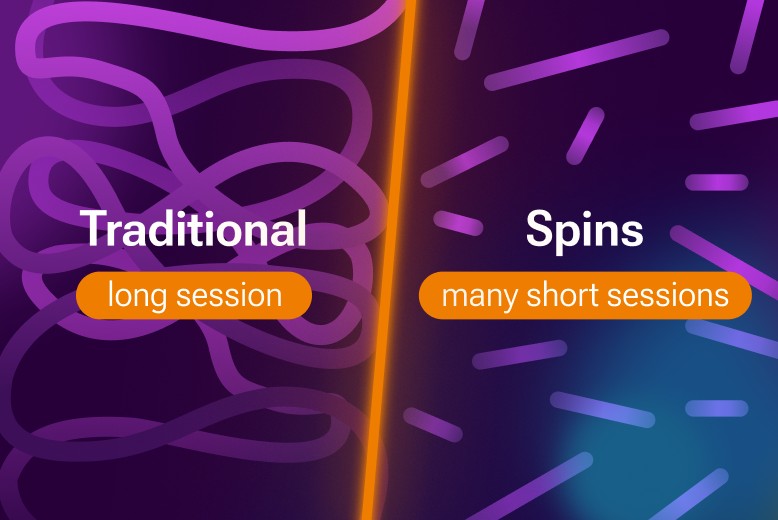
Players tend to engage in several consecutive sessions within a single visit, rather than committing to one long game. The short format lowers the barrier to re-entry, making it natural to play multiple rounds in a row instead of extending a single session.
Sportsbook cross-sell
The multiplier mechanic appeals to slot players, while sportsbook users use Spins to fill short gaps between bets. These 5-minute sessions extend time-on-site during natural pauses without interrupting their main betting activity, generating additional poker revenue from existing traffic.
Distributed engagement
Instead of long, isolated sessions, player activity becomes more fragmented and frequent throughout the day. Users return more often for shorter interactions, increasing overall touchpoints without requiring extended time commitments.
Game Design Levers in a Poker Software Solution
Spins Poker delivers operational advantages that traditional formats struggle to match:
- 2-week integration into casino or sportsbook platforms, with no need to build a standalone poker infrastructure
- Day-one liquidity through the EvenBet network, removing the need for gradual traffic acquisition
- GGR uplift potential of 10–14%, along with LTV growth driven by sportsbook cross-sell
- Monetization of sportsbook “dead time”, turning pauses between bets into short 5-minute sessions
- Predictable scaling, supported by a fixed structure and network-driven liquidity
Performance KPIs: What to Measure
Track these signals to quantify Spins impact:
- Sessions per user per day (Spins vs other poker)
- % of casino players trying Spins (cross-vertical conversion)
- Spins GGR share within total poker revenue
- Sportsbook→Spins conversion during off-peak hours
- Average sessions per visit (frequency indicator)
Sportsbook operators see stabilized engagement between live events, converting “dead time” into incremental poker GGR.
Product Trade-Offs
Spins Poker introduces clear advantages in speed and engagement, but it also comes with trade-offs that operators need to consider.
The format offers less room for deep, strategic play compared to traditional tournaments, which may reduce its appeal for more experienced players. At the same time, the use of multipliers increases variance, making outcomes less predictable and more volatile from a player perspective.
It also shifts the audience mix, as casual users are more likely to engage with fast, high-intensity formats, while some traditional poker players may prefer slower, skill-driven gameplay.
In practice, Spins Poker is most effective as a complementary layer within the poker ecosystem, supporting acquisition and engagement alongside deeper formats.
Where Spins Fits in the Ecosystem
- Casino bridge: Multiplier mechanics pull slot players into P2P poker
- Sportsbook companion: Fills gaps between wagers with real-opponent action
- Retention engine: Creates daily habit vs occasional long sessions
EvenBet advantage: Casino/sportsbook-native integration preserves core user journey while adding poker revenue stream.
Poker as Frequency-First Product
Spins Poker reframes poker around frequency rather than session depth. Each session delivers a complete experience within minutes, allowing engagement to build through repetition rather than duration.
This changes how value is generated. Instead of relying on a small number of long sessions, revenue becomes distributed across many short interactions, creating a more stable and predictable engagement pattern.
For operators, this introduces a new monetization layer within the existing ecosystem. Spins Poker captures moments that would otherwise remain unmonetized, between bets, during short mobile sessions, or in transitions between products.
As player behavior continues to shift toward shorter, more dynamic interactions, formats built around frequency are becoming central to how iGaming products grow and perform.
Spins Poker fits naturally into this model, extending poker beyond traditional session-based usage and into a continuous engagement loop within the broader platform.
This approach opens new opportunities to increase GGR, improve retention, and monetize previously underutilized player time. For teams looking to expand their monetization strategy, exploring how Spins Poker can fit into an existing platform and support high-frequency engagement across casino and sportsbook products is a practical next step. Get in touch to learn more or request a demo.