

 18 August 2026
  9 min
9 min  9 views
 We recently saw a particularly striking case involving the launch of a casino game inside a poker room. For me, it was another good reminder that simply adding a game is never enough. Some launches take off almost immediately, while others struggle to gain traction, even when the games themselves seem equally promising.
Unfortunately, I cannot share the name of the partner or disclose certain details because of an NDA. But in this case, that hardly matters. The reasons behind the result are much more interesting than the name attached to it, and the lessons are relevant to almost any poker room considering casino content.
Case Study: Launching a Casino Game
The project in this case operates under an NDA, so I cannot disclose the partner’s name or other identifying details. What matters here is the setup: it is a medium-sized poker room with a very traditional audience.
The product reflects that audience. The interface and feature set remain close to the platform’s basic configuration, and players generally do not expect extensive gamification or frequent product changes.
That made the launch of Cowboy Hold’em particularly interesting. We managed to convince the partner to test the game as an additional revenue stream, and they agreed to give it a try.
There was no major marketing campaign behind the launch. The only promotion was a small banner inside the poker client.
The result was immediate. Cowboy Hold’em quickly became a meaningful additional revenue stream and ultimately increased the room’s total revenue by around 10%.
At first glance, this might look like a lucky hit. I do not think it was. The result becomes much easier to explain once you look at the specific conditions that made this launch work.
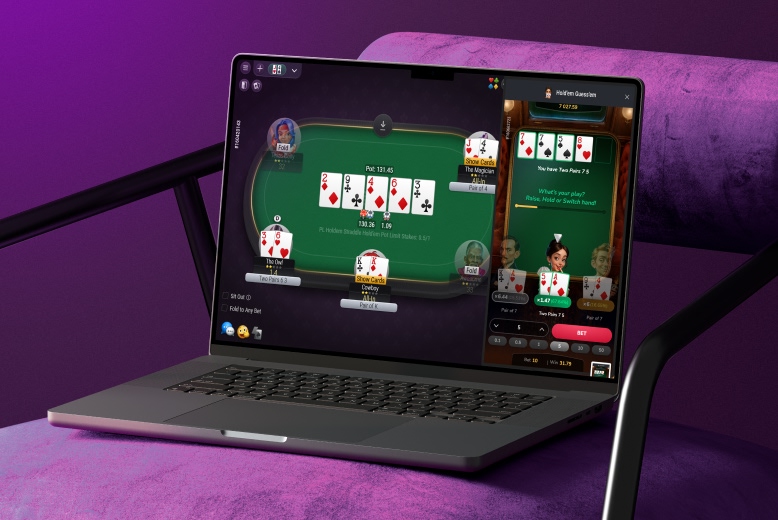
Key #1. Novelty
Something new appearing in a poker room naturally attracts attention, especially when new releases are relatively rare.
A poker room does not necessarily need extensive gamification or casual mechanics to find its audience. With the right acquisition strategy, even a very traditional product can work well. But its core audience will likely consist of fairly conservative, poker-first players.
And conservative does not mean indifferent to novelty. In my experience, even dedicated poker players are curious when something genuinely new appears in a familiar environment. In this case, we did not need an elaborate promotional campaign to create that curiosity. A simple, unobtrusive announcement was enough to put the game in front of players and encourage them to try it.
Key #2. The Right Game
Not every casino game is equally well suited to a poker audience. Cowboy Hold’em has an important advantage here: it feels naturally complementary to poker.
The core mechanics are already familiar. Players do not have to stop and learn an entirely new set of rules before they can enjoy the game. They recognize the cards, the combinations, and much of the underlying logic almost immediately. That dramatically lowers the barrier to trying it.
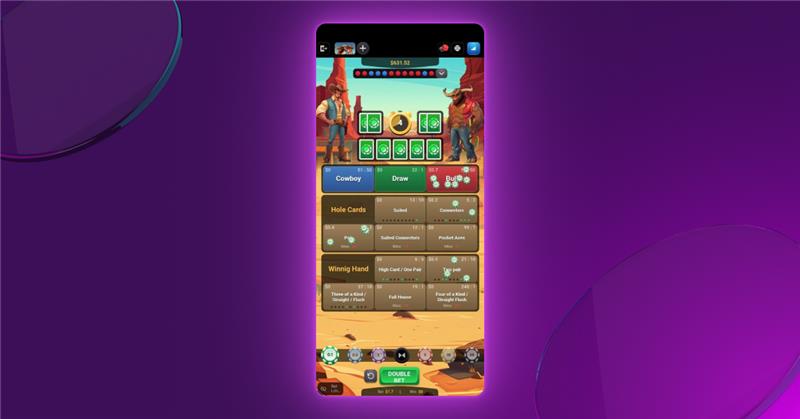
The pace matters just as much. Cowboy Hold’em is fast enough to fit into the natural pauses of a poker session. A player waiting for the next hand at a poker table can play several rounds without really stepping away from the poker experience.
To me, this is what an ideal cross-sell looks like. You are not asking players to switch their attention to something completely different. You are giving them another way to enjoy a familiar type of gameplay during moments that would otherwise be spent waiting.
 Windows
  macOS
macOS  iOS
iOS  Android
 Key #3. Localization
Localization played another important role, and in this case it went well beyond translating the interface into the audience’s language.
The poker room owner decided not to launch Cowboy Hold’em under its original name. Instead, the game was renamed with a reference to another game that was already popular in the region and had a somewhat similar mechanic.
I think this was a particularly smart decision. Before players had even opened the game, the name gave them a rough idea of what kind of experience to expect. More importantly, it connected something unfamiliar with something they already knew and enjoyed.
That familiarity created a basic level of trust before the first round was even played. Players saw something that already felt relevant to their gaming habits and, therefore, worth trying.
Key #4. Fine-Tuning
Our partner knows their players extremely well. More importantly, after the launch, their team paid close attention to how those players actually interacted with the new game.
They went deep into Cowboy Hold’em’s settings rather than treating the default configuration as something fixed. Different parameters were tested, adjusted, and tested again as the team watched player behavior and looked for the combination that worked best for this particular audience.
I think this part of the case is easy to underestimate. Choosing the right game gets you only part of the way. The same game can perform very differently depending on how it is configured for a specific player base.
In this case, the operator did not simply launch Cowboy Hold’em and wait for the numbers. Their team actively fine-tuned the experience until they found the configuration that worked best for their players.
Key #5. A Solid Player Base
The room may be relatively small, but it has something more important than scale: an established player base and a healthy poker ecosystem. You can see that in its performance. The room has been growing slowly, but consistently, year after year.
In my experience, this is exactly the kind of environment where entertainment features, gamification, and additional gaming content work best.
Cowboy Hold’em did not create demand out of nowhere. It was introduced to an audience that was already active, engaged, and comfortable with the poker room. That gave the new game a much stronger foundation than any promotional campaign could have created on its own.
Conclusion
In my articles, I often write about the mistakes poker operators make, especially when it comes to understanding the role of product features and using them at the right stage of a poker room’s development.
This case, I think, is a useful counterpoint. It shows what can happen when the fundamentals are already in place and a new product is introduced thoughtfully.
There was no major redesign, aggressive promotion, or complicated growth strategy behind this result. It came from a combination of the right game, the right audience, smart localization, careful fine-tuning, and a healthy existing player base.
For me, that is what makes this case worth sharing. Sometimes a 10% increase in revenue does not require reinventing the entire poker room. It requires understanding what you already have and adding the right thing to it.