
 22 January 2026
  Upd: 22 June 2026
  29 min
  7739 views
 Despite the fact that gambling in the UAE has not yet been fully legalized through a comprehensive federal law, industry experts are already discussing the country not as a typical emerging iGaming market, but in the same analytical context as Las Vegas, Singapore, and Macau.
This shift in perception reflects the scale of investment, the structure of regulation being put in place, and the UAE’s deliberate approach to building a high-value gaming ecosystem.
In this article, we break down what the UAE gambling authority is and how it operates, explore gambling in the UAE and the new regulations shaping the market, and assess whether online casinos in Dubai are likely to emerge under the current framework. We also examine the current state of gambling companies in the UAE, explain what it takes to obtain a UAE iGaming licence. Finally, we outline key operational considerations.
Market Size and Growth Outlook: Why the UAE Is on Every Investor’s Radar
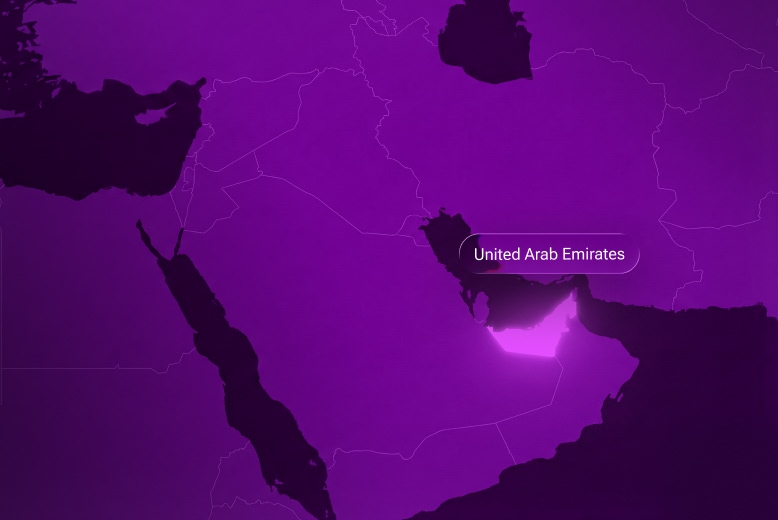
By the end of 2025, the UAE has moved from being a market of speculation to one of serious financial modeling. What was once discussed only as a long-term possibility is now increasingly treated as a new, structurally significant iGaming market in the making.
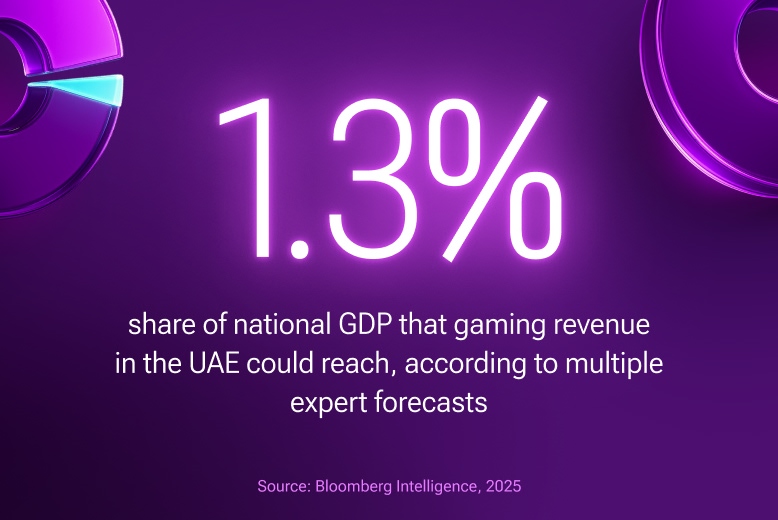
According to estimates cited by Bloomberg Intelligence, total gaming revenue in the UAE could reach around 1.3% of national GDP, equivalent to approximately $6.5–6.6 billion annually once the market is fully operational. That figure alone would place the UAE ahead of Singapore’s current gaming revenues and immediately into the top tier of global gambling jurisdictions.
Other analysts take a slightly wider view, projecting a $5–8 billion annual GGR range, depending on how quickly the market expands and how many projects are ultimately approved. Even the lower end of this range would make the UAE one of the most commercially attractive gaming markets launched in the past two decades.
What makes these numbers particularly compelling is not just volume, but quality of revenue. Investment banks and industry analysts consistently point to the UAE’s unique audience profile: a high concentration of affluent residents, premium international tourism, strong hospitality infrastructure, and a consumer base accustomed to high-end entertainment spending. As a result, expected margins are often compared not to emerging markets, but to Singapore-level profitability, where fewer venues generate disproportionately high returns.
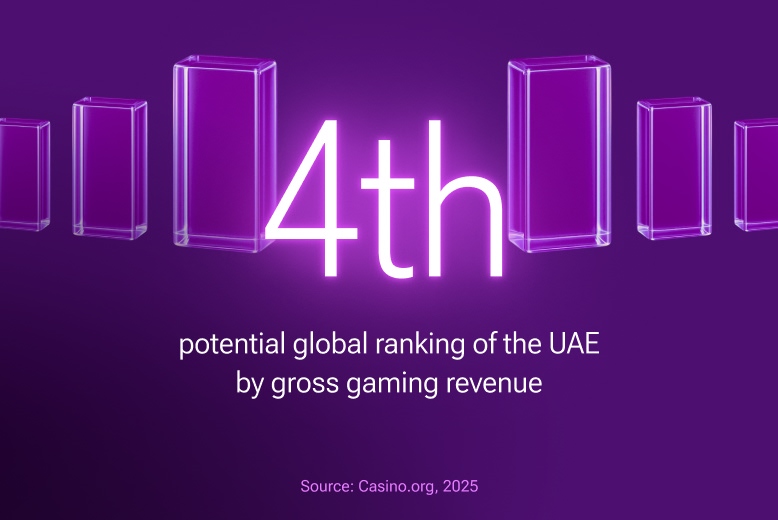
Some projections go even further. In a scenario where three to four integrated resorts are approved over time, several experts argue that the UAE could realistically become the fourth-largest gaming hub globally by gross gaming revenue, after Macau, Las Vegas, and Singapore. This would not be driven by mass-market gambling, but by a tightly regulated, high-value model focused on destination resorts, controlled online channels, and premium player segments.
At the same time, these forecasts are highly sensitive to regulatory pacing. The difference between a conservative rollout and a more liberal expansion is measured in billions of dollars annually. A slow, emirate-by-emirate approach with limited licenses would cap growth in the medium term, while a broader adoption across multiple emirates—both land-based and online—would accelerate the UAE’s rise into the top tier.
This is why 2025 is widely viewed as a turning point rather than an endpoint. The market’s revenue potential is no longer hypothetical, but the final shape of that market remains undecided. How many licenses are issued, which emirates participate, and how online gaming is positioned alongside integrated resorts will ultimately determine whether the UAE settles into the lower or upper bounds of these projections.
That uncertainty makes the next question unavoidable: how regulation evolves from here. The size of the opportunity is now broadly understood. The real variable — and the key driver of every scenario outlined above — is the regulatory framework that will govern market access, licensing, and operational freedom in the years ahead.
UAE Gambling Laws: How iGaming Regulation in the UAE May Evolve
While the commercial potential of the UAE iGaming market is already clear, regulation remains the decisive variable that will determine how — and how fast — that potential is realized. As of late 2025, the country is operating in a transitional phase: the regulatory foundation is in place, first licenses have been issued, but the final architecture of the market is still being shaped.
Current Regulatory Position: Where the UAE Stands Today
By the end of 2025, the UAE has established a centralized federal regulator for commercial gaming, the General Commercial Gaming Regulatory Authority (GCGRA). The authority has been granted broad supervisory powers over all forms of commercial gaming, including land-based casinos, online gaming, sports betting, lotteries, and associated suppliers.
In 2025, the GCGRA, together with the National Anti-Money Laundering and Counter-Terrorism Financing Committee, published a Commercial Gaming Policy paper. This document sets out regulatory priorities, supervisory principles, and risk-based approaches for the industry.
The policy paper provides practical direction on:
- risk-based AML oversight,
- player due diligence and monitoring,
- responsible gambling safeguards,
- reporting and supervisory expectations for licensed operators.
At the same time, a comprehensive federal gambling law had not yet been formally enacted by the end of 2025, despite the fact that licenses for online betting, sports wagering, lottery operations, and casino projects have already been issued.
This combination is unusual but intentional. It highlights the UAE’s transitional regulatory model, where market activity is permitted and supervised through a centralized regulator and policy instruments, while the broader legislative framework is still being finalized.
Several important characteristics define the current stage:
- Regulatory infrastructure exists, but the legislative framework is still being finalized. While licenses have already been issued, comprehensive public legislation governing all aspects of commercial gaming has not yet been fully codified or consolidated into a single, transparent statutory regime.
- Licensing has begun, but remains highly selective. A small number of licenses have been granted across different categories, including lotteries, integrated resorts, online gaming platforms, and B2B suppliers. This indicates clear intent to launch the industry, while maintaining tight control over scale and pace.
- The market is being built “from the inside out.” Priority has been given to supplier licensing, technical certification, AML frameworks, and operational oversight before opening broader access to B2C operators. This sequencing signals a long-term regulatory mindset rather than a short-term revenue play.
- Emirate-level participation remains discretionary. Although regulation is centralized, individual emirates retain influence over whether and how commercial gaming projects are implemented within their territories. This preserves political and cultural flexibility at the local level.
In short, the UAE has moved past the question of whether to regulate iGaming and is now focused on how to structure it responsibly. What remains open is the speed and breadth of expansion.
Most analysts agree on one point: the UAE is not experimenting blindly. The regulatory approach emerging so far suggests a cautious, phased rollout designed to balance economic upside with social, cultural, and reputational considerations. From that starting point, three broad regulatory scenarios are currently discussed within the industry.

Scenario 1: Conservative, Controlled Expansion (Baseline Case)
In the most cautious scenario, the UAE continues with a highly selective licensing model, issuing a limited number of B2C licenses and expanding slowly, emirate by emirate.
Under this approach:
- Each participating emirate may approve only one online operator and a very limited number of land-based casino projects.
- Online gaming remains tightly coupled to strong responsible gambling, AML, and geolocation controls.
- Market access is exclusive, capital-intensive, and deliberately constrained.
This scenario aligns closely with how regulation has unfolded so far. It prioritizes regulatory control and social stability over rapid growth, ensuring that any negative externalities are detected early and addressed before further expansion.
For operators and investors, this would mean fewer licenses, higher entry barriers, and stronger first-mover advantages. Revenue potential would still be substantial, but competition would be limited, favoring well-capitalized players with long-term commitments and strong compliance track records.
Scenario 2: Incremental Expansion Following Initial Market Validation
A more optimistic — and widely viewed as the most realistic — scenario assumes that once the first licensed projects demonstrate operational stability, the UAE begins to expand the framework incrementally.
In this case:
- Additional emirates follow early adopters, gradually increasing the number of licensed markets.
- Online gaming categories may be expanded, with clearer definitions and more standardized licensing processes.
- More B2B suppliers and service providers are accredited, lowering operational friction for operators.
This model mirrors the UAE’s approach in other regulated sectors: start narrow, validate the system, then scale with precision. If early data confirms strong compliance, controlled player behavior, and solid tax and economic outcomes, regulators gain the confidence needed to widen access without reputational risk.
For the industry, this scenario creates predictable growth rather than explosive expansion. It rewards operators who are “regulation-ready” from day one—those able to scale responsibly as rules evolve, rather than relying on aggressive user acquisition or regulatory arbitrage.
Scenario 3: Expansion Driven by Economic and Operational Performance
The most bullish scenario assumes that initial projects significantly outperform expectations—both financially and socially—prompting regulators to fast-track expansion.
In this case:
- Multiple emirates approve integrated resorts within a shorter time frame.
- Online gaming becomes a more prominent pillar of the ecosystem, not just a complementary channel.
- The UAE positions itself openly as a global gaming hub, competing with Singapore and Las Vegas for premium tourism and investment.
While possible, this scenario remains conditional. It would likely require not only strong revenue results, but also demonstrable success in preventing problem gambling, financial crime, and reputational fallout. In other words, accelerated expansion would be a reward for regulatory success, not a starting assumption.
For investors, this represents the highest upside—but also the most uncertainty. Those best positioned to benefit would be operators and technology partners already embedded in the ecosystem, with licenses, infrastructure, and regulatory trust established early.
What All Scenarios Have in Common
Despite their differences, all credible regulatory scenarios share several constants:
- Strict licensing and compliance will remain non-negotiable.
- Market access will favor experienced, well-capitalized players.
- Regulatory change will be incremental, not abrupt.
- Technology, monitoring, and transparency will be central to regulatory confidence.
In that sense, the UAE is not asking whether to regulate iGaming—it is deciding how far and how fast to go.
For operators evaluating entry strategies, this means that success will depend less on predicting a single outcome and more on preparing for multiple regulatory paths. Flexibility, compliance-by-design, and modular product architectures are likely to matter more than speed alone.
The next logical question, then, is not just when regulation will expand, but what products and formats are best suited to this environment. That is where game design, player behavior, and operational risk intersect—and where early strategic decisions can have outsized long-term impact.
The next chapter explores which gaming formats are most likely to succeed under the UAE’s regulatory trajectory, both today and in the years ahead.
Gaming Formats and Player Behavior: What Is Likely to Work in the UAE
Understanding which gaming formats are likely to succeed in the UAE requires looking beyond regulation alone. While the legal framework defines the boundaries of what is permitted, player behavior, cultural context, and usage patterns will ultimately determine which products gain traction — and which struggle to scale.
As of late 2025, the UAE represents a rare case where a market is opening without deeply rooted gambling traditions, but with a large, affluent, and digitally mature audience. This combination creates both constraints and opportunities for operators.
A Regulator-Friendly Signal: Innovation Over Imitation
One of the more telling signals from the regulator has been its stance on product design. Public statements from GCGRA leadership make it clear that operators are not expected to simply replicate existing Western models and retrofit them to local rules.
Instead, the regulator has explicitly encouraged the industry not to design products “around regulation,” but to bring forward new concepts, with the assurance that the authority will work to regulate innovation rather than suppress it.

This is a meaningful departure from highly prescriptive jurisdictions. It suggests that:
- the UAE is open to non-traditional and hybrid formats,
- innovation is seen as compatible with compliance,
- product differentiation will be viewed positively if risk controls are embedded by design.
For operators, this shifts the conversation from “what is allowed” to “how to design responsibly from day one.”
Player Demographics: Who the Market Is Really For
An important nuance of the UAE market is that there is no explicit federal ban on local citizens participating in licensed gaming. In theory, residents and nationals may access licensed platforms.
In practice, however, two factors shape the real audience:
- Emirate-level discretion. Some more conservative emirates may introduce additional local constraints or discourage participation by citizens, even within a federal framework.
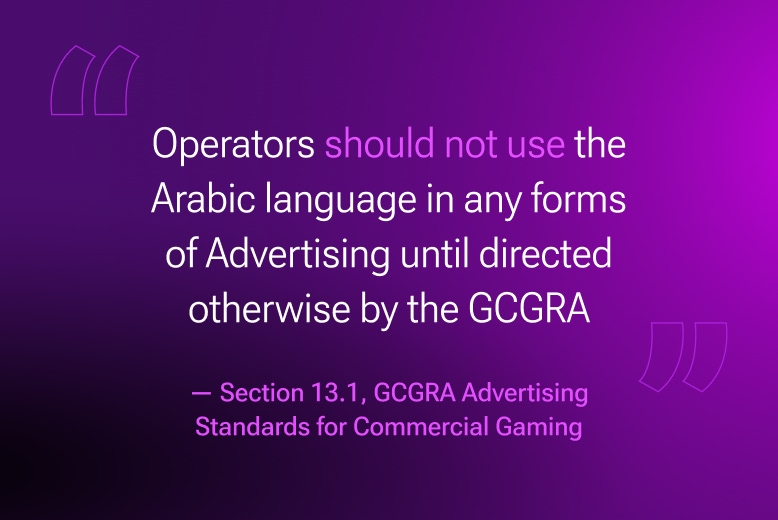
- Advertising and language restrictions. Current standards prohibit the use of Arabic-language advertising for commercial gaming, which significantly limits mass outreach to local nationals.
As a result, early-stage demand is expected to come primarily from:
- expatriates,
- international visitors,
- globally mobile professionals already familiar with regulated gaming environments.
This has direct implications for format selection: products should assume an international audience, with familiar mechanics, clear UX, and English-first interfaces.
Sign up for our email newsletter and get your free Poker Marketing Guide
Behavioral Expectations and UX Implications
From a behavioral standpoint, several patterns are likely to define early adoption:
- Trust and legitimacy matter more than novelty. Users entering a newly regulated market will prioritize licensed status, payment reliability, and transparency.
- Clear limits are not a deterrent. Built-in controls—deposit caps, time reminders, cooling-off tools—are expected and may even increase confidence among cautious users.
- Entertainment framing beats aggressive monetization. Products positioned as premium entertainment, rather than high-risk gambling, align better with cultural expectations and regulatory tone.
In short, the UAE market favors controlled engagement over volume-driven play.
Core Formats: What Is Already Emerging
Based on licenses issued and platforms launched so far, several core verticals are clearly positioned as foundational:
- Sports betting, particularly on globally popular sports such as football, cricket, and international tournaments.
- Online casino, focused on well-known games with transparent mechanics (roulette, blackjack, baccarat, slots).
- Lottery, already operating as a regulated and socially familiar entry point.
These formats are not surprising. They reflect existing demand that previously flowed to offshore platforms and are relatively easy to supervise from a compliance perspective.
However, long-term differentiation is unlikely to come from these products alone.
Formats with Strong Medium-Term Potential
Looking ahead, several format categories appear especially well suited to the UAE’s market dynamics:
- Fast-session, high-engagement formats: Games designed for short play cycles—quick outcomes, limited session length, and clear rules—align well with both regulatory priorities and user behavior. They support responsible play controls and reduce exposure to problematic patterns.
- Skill-influenced and hybrid games: Formats that blend chance with skill, social interaction, or competitive elements may resonate strongly with younger, digitally native users. These games also fit the regulator’s stated openness to innovation beyond classic casino mechanics.
- Social and tournament-based mechanics: Leaderboards, missions, limited-time events, and structured competitions introduce engagement without relying solely on continuous wagering. This is particularly relevant in a market where entertainment framing matters as much as monetization.
- Mobile-first design: The UAE has one of the highest smartphone penetration rates globally. Any format not optimized for mobile use—both in UX and session structure—will face an immediate disadvantage.
Poker as a Special Case
Poker occupies a unique position in the UAE’s emerging iGaming ecosystem. On the one hand, it is a globally recognized format that clearly falls within the regulator’s definition of permitted online gaming. On the other, poker does not have the deep-rooted local traditions seen in Europe or North America, which limits the immediate appeal of classic, long-form poker ecosystems.
However, this does not make poker irrelevant — quite the opposite.
The UAE market is structurally oriented toward international tourists and expatriates, many of whom already understand poker as a familiar, skill-based game. In this context, poker plays a different role than in mature poker markets: it functions less as a standalone destination and more as a strategic engagement and acquisition tool within a broader casino environment.
From an operator’s perspective, poker remains one of the most cost-effective ways to attract and retain casino players, particularly when positioned correctly. Player-versus-player dynamics reduce content costs, while social interaction and competition increase session quality and cross-vertical engagement.
That said, traditional poker models — complex lobbies, professional-heavy liquidity, and long sessions — are unlikely to scale efficiently in the early stages. Formats better suited to the UAE include:
- short-form poker variants,
- jackpot-style Spin & Go games,
- fast tables with automated seating and strict time controls,
- poker integrated as a casino feature, rather than promoted as a standalone poker room.
These approaches lower the entry barrier, limit skill dominance, and fit naturally into responsible gambling frameworks. More importantly, they allow poker to deliver its core value — social interaction and competitive entertainment — without requiring players to adopt poker as a primary gaming activity.
In a market still forming its relationship with poker, this positioning enables operators to benefit from poker’s strengths while avoiding the structural risks of launching a full-scale poker ecosystem too early.
Foreign Participation in the UAE iGaming Industry: What International Players Need to Know
From the outset, the UAE’s approach to commercial gaming has been designed to attract international capital, expertise, and technology — but on clearly defined terms. While the market is open to foreign participation, it is not an open-access jurisdiction. For international operators and investors, success depends on understanding how foreign involvement is structured, assessed, and constrained within the UAE’s regulatory and political framework.
Is Foreign Ownership Allowed?
As of late 2025, there is no explicit federal prohibition on foreign ownership of licensed iGaming or gaming-related businesses in the UAE. International operators, suppliers, and investors are legally permitted to participate in the market, provided they meet licensing and suitability requirements set by the federal regulator.
In practice, however, foreign participation is evaluated through a substance-over-form approach:
- ownership structures must be fully transparent,
- ultimate beneficial owners are scrutinized in detail,
- control and influence matter more than nominal shareholding percentages.
This means that while foreign capital is welcome, opaque holding structures or passive offshore vehicles are unlikely to be approved.
The Role of Local Partners
Although not formally mandated by law, partnerships with local entities are common and often strategically advantageous, particularly for land-based projects and large-scale operations.
Local partners may include:
- government-linked developers,
- state-owned or semi-state hospitality groups,
- UAE-based investment companies with established regulatory relationships.
These partnerships serve several purposes:
- facilitating engagement at the emirate level,
- aligning projects with local development priorities,
- reducing political and execution risk.
For online-only operations, local partnerships are less structurally necessary, but still beneficial for banking access, operational credibility, and long-term regulatory alignment.
Emirate-Level Dynamics and Foreign Entry
While licensing authority is centralized, implementation occurs within individual emirates, and this has implications for foreign participants.
Different emirates may:
- vary in their appetite for gaming projects,
- apply informal expectations around local participation,
- prioritize tourism, hospitality, or digital innovation differently.
As a result, foreign operators should treat emirate selection as a strategic decision, not merely a geographic one. Entry strategies that work in one emirate may not translate seamlessly to another.
Investment and Suitability Reviews
Foreign investors are subject to the same — and in some cases heightened — suitability assessments as local participants.
Key areas of review include:
- source of funds and capital adequacy,
- compliance history in other jurisdictions,
- corporate governance standards,
- alignment with responsible gambling and AML priorities.
The UAE places particular emphasis on reputational risk. Investors with unresolved regulatory issues elsewhere, aggressive enforcement histories, or associations with grey-market activity may face challenges, even if those activities are technically legal in other regions.
Foreign Technology and Know-How as a Strategic Asset
One of the clearest signals from the UAE regulator is the value placed on international expertise.
Foreign participation is especially encouraged in areas such as:
- gaming platforms and infrastructure,
- compliance and monitoring technology,
- payment and geolocation solutions,
- responsible gambling systems,
- advanced data analytics and reporting.
In many cases, technology providers and B2B suppliers are the first foreign entities to receive licenses, reflecting the regulator’s focus on building a compliant ecosystem before scaling B2C access.
For international companies, entering as a technology partner or supplier can be a lower-risk, earlier entry point than pursuing a full B2C license.
Strategic Considerations for International Entrants
For foreign businesses evaluating the UAE, several strategic principles stand out:
- Long-term commitment matters. The UAE favors partners who view market entry as a multi-year investment, not a short-term revenue opportunity.
- Compliance credibility is a competitive advantage. Proven performance in highly regulated markets strengthens applications.
- Local alignment reduces friction. Whether through formal partnerships or operational presence, local engagement improves execution.
- Flexibility beats speed. The ability to adapt to evolving regulatory expectations is more valuable than rapid market entry.
Conclusion: A Market Defined by Selective Opportunity
The UAE is emerging as one of the most strategically important new iGaming markets of the decade — not because of speed or scale, but because of structure, intent, and long-term ambition. Unlike jurisdictions that opened rapidly and adjusted later, the UAE is building its gaming industry deliberately, prioritizing regulatory credibility, financial integrity, and reputational safety from the outset.
For operators and investors, this creates a market with high entry barriers but equally high potential rewards. Revenue projections are compelling, the audience is affluent and international, and the regulatory direction — while still evolving — is already clear in its priorities. Success will not depend on aggressive expansion, but on alignment with a system designed for controlled growth.
In that sense, the UAE should be viewed not as a quick-win market, but as a strategic platform: one where early, well-prepared participants can secure long-term positions in an ecosystem that is likely to shape gaming standards far beyond its borders.