

 15 April 2026
  16 min
  5453 views
 In online poker, revenue lives and dies by how well a platform engineers its internal economy. The way money circulates across tables, how long players stick around, and whether they come back tomorrow — all of it traces back to a single mechanism: rake.
If you’re asking what is a rake in poker, the answer goes beyond a simple fee — it sits at the core of how the entire system functions.
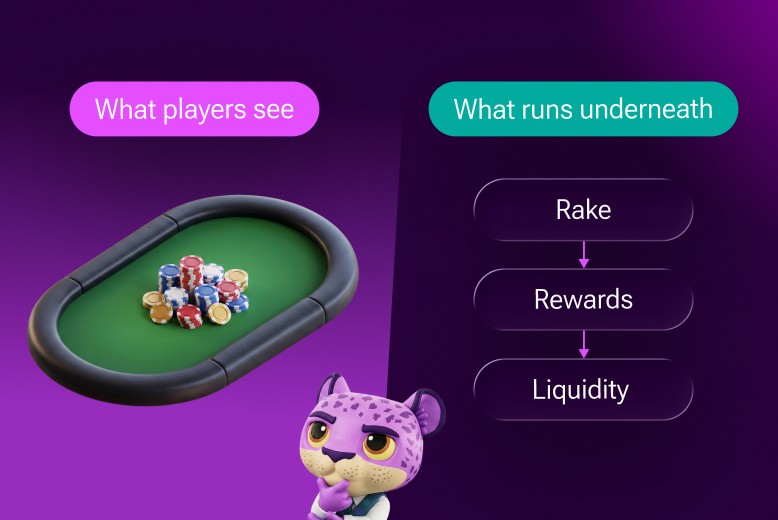
For operators, rake is more than a fee, it’s a lever. Set it right, and you extend player lifetime value, keep sessions running longer, and maintain the kind of table liquidity that makes a platform feel alive. Set it poorly, and the ecosystem quietly bleeds out. Rake defines the line between a platform that scales and one that slowly cannibalizes its own player base.
Getting to grips with rake at this level means moving past surface-level monetization thinking. It allows operators to build systems where engagement stays consistent, revenue stays predictable, and the ecosystem — player by player, session by session — stays intact.
What Does Taking a Rake Mean in Poker?
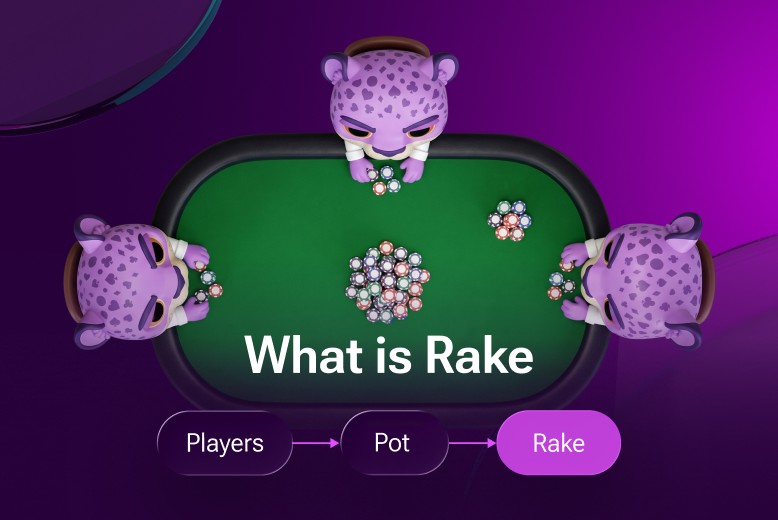
At its core, rake is a service fee charged by a poker room to help cover the costs of operating the game. Since the house does not have an interest in who wins the pot, rake supports secure software, customer support, compliance, and the broader regulated environment around the game.
In many formats, rake poker rules define when the fee is collected. In some rooms, no rake is taken if the hand ends before the flop — often referred to as “No Flop, No Drop,” although exact rules vary.
How Do Casinos Make Money on Poker?
Poker sites generally generate revenue through several common structures.
Pot-Based Rake
This is the most common model in cash games. A small percentage of the pot is taken at the end of a hand, although the exact percentage varies by room, stake level, and format.
To keep games fair at higher stakes, many platforms also apply a rake cap. For example, a room might charge a percentage of the pot but stop increasing the fee once it reaches a set maximum. The exact cap depends on the operator, the table type, and the market.
In lower- and mid-stakes games, rake caps are often relatively modest, but the exact range still differs significantly from one room to another.
Tournament Fees
In tournaments, the operator typically takes a fixed fee at the time of entry. A common way to display this is in a format such as buy-in plus fee, where part of the entry goes into the prize pool and part goes to the house. The exact split depends on the tournament structure and operator strategy.
Subscription and Time Collection
In high-stakes live games or private club environments, some platforms use a seat fee or a time-based collection model instead of taking a percentage from each pot. This approach is often used in premium settings, but pricing still varies by room and business model.

Rake Attribution Models: Contributed vs. Weighted
How rake is calculated can influence player strategy, loyalty, and perceived fairness. Modern platforms usually rely on one of two common models.
Contributed Rake
In this model, each player who contributed to the pot receives a share of the rake credit. If several players are involved in a hand, the rake is split according to the room’s rules and loyalty system. This model is simple, but players who contribute more may sometimes feel it does not fully reflect their actual involvement in the hand.
Weighted Contributed Rake
Weighted contributed rake distributes credit proportionally based on how much each player contributed to the pot. For example, if one player contributes most of the money in a hand, that player receives a larger share of the rake credit.
This approach is often seen as more transparent and closer to actual contribution, especially for high-volume players and operators that want to align rewards more closely with player activity.
Balancing the Economy: The Operator’s Perspective
For a poker platform, setting rake is a system-level decision.
High rake can increase short-term revenue, but it may also shorten session length, accelerate bankroll depletion, and make recreational players less likely to return. Professional players may become more selective as well, which can reduce table liquidity over time.
Low rake can attract volume and improve retention, but it may not fully cover the costs of security, infrastructure, customer support, and product development.
A well-designed poker rake structure can influence table liquidity, session duration, and long-term player retention. It shapes how often players come back and how sustainable the ecosystem becomes.
Successful operators often look beyond rake as a single revenue source. They may combine poker with side games, promotional campaigns, tournament series, or other engagement tools to diversify income without putting too much pressure on core gameplay.
To support that balance, modern B2B poker platforms often offer configurable rake settings, including adjustable caps, game-specific structures, and built-in rakeback or leaderboard tools. These systems help operators lower the effective cost for players while still maintaining engagement and revenue.
What Can Happen When Rake Is Misconfigured
Even small changes in rake structure can have a measurable effect on performance.
- Bankroll depletion may happen faster, which can shorten sessions
- Table liquidity can decline if players feel the games are too expensive
- Player lifetime value may decrease if retention weakens
- Recreational users may churn more quickly if the game feels unrewarding
Because poker depends on liquidity, these effects build up over time. A poorly set rake does not break the ecosystem instantly, but it creates pressure that makes it harder for the room to stay stable and competitive.
How Rake Shows Up in the Product
For players, rake becomes part of the experience through the interface.
Modern poker products increasingly expose rake data in ways that can build trust and improve engagement:
- real-time rake display during gameplay
- post-hand breakdowns showing deductions
- player dashboards with rake contribution tracking
- loyalty progress indicators tied to rakeback systems
This visibility turns rake in poker from a hidden cost into a more transparent part of the experience. It can also help players understand value more clearly and feel more confident in the platform.
What Players Expect in 2026
Modern poker players are more informed and more selective than before. To maintain a loyal user base, platforms need to meet several expectations.
Transparency and real‑time visibility
Players expect clear, real‑time visibility into how much rake is being taken in each hand or tournament. Many now compare rooms not only by stakes and traffic, but by how transparently the rake structure is communicated and displayed in the UI. Hidden fees or vague explanations damage trust quickly, especially in an environment where rake‑calculation tools and comparisons are widely available.
Predictable, fair rake structures
Players increasingly prefer rake models that feel fair and predictable, such as capped rake and consistent percentage structures across stakes. Rising rake at many sites in 2026 has made grinders and serious players especially sensitive to caps, preflop rake rules, and effective rake after rakeback. Many now actively choose platforms with lower effective rake, softer structures, or more generous caps before they even open a table.
Rakeback and “value‑back”
Rakeback has become table stakes: many regular players now expect a significant portion of the rake they generate to be returned through rewards, cashback, or tiered loyalty programs. A common benchmark in the market is in the range of 20–40%, but the exact structure varies by operator, stake level, and program design. Progressive rakeback, tiered VIP systems, and “automatic” deals (e.g., fixed weekly percentages) are what separate “good‑value” platforms from “expensive” ones in players’ eyes.
Rake as investment in the ecosystem
Players expect the rake they pay to be reinvested into the product — faster withdrawals, better fraud and bot detection, a cleaner UI, and more reliable software. If rake increases but the platform does not visibly improve, the perception is that the operator is simply squeezing margins instead of improving the environment.
Context‑aware rake for different player types
In 2026, recreational players especially value rake‑friendly features such as rake‑reduced or rake‑free freerolls, softer rake structures at lower stakes, and anonymous tables that protect them from “regs.” Meanwhile, high‑volume grinders look for aggressive rakeback, low effective rake, and stable rake‑back structures that do not suddenly change with promotions or operator policy.
Putting Rake to Work
In practice, what is a rake in poker? It is the fee the platform takes from each game that directly impacts how long players stay and how the tables perform. It also defines the cost of a reliable, well-functioning environment and supports infrastructure, security, and ongoing product development.
The choice of rake model, such as weighted contributed rake, combined with transparent UX, clear caps, and well-structured reward systems helps maintain steady liquidity, consistent engagement, and sustainable growth.
For operators looking to refine their rake structure, introduce progressive rakeback, or test gamified loyalty tools, EvenBet Gaming offers a flexible, turnkey poker platform where rake settings, reward logic, and engagement systems can be configured and scaled.
Get in touch to explore how these mechanics can be applied to your platform.
FAQ
What does taking a rake mean in poker?
Taking a rake means the poker room (casino or online platform) charges a small commission fee for hosting the game.
Since poker is player-versus-player, this fee is the primary revenue source for the operator. The rake can be applied in different ways depending on the format, such as being taken from pots, included in entry fees, or charged as a separate usage fee.
What is poker rake and how does it work?
Poker rake is the operational fee a poker room collects for running games. The exact mechanism depends on the format, but it generally involves taking a small portion of player activity, either during gameplay or at the point of entry, while the rest remains in circulation between players.
How do poker platforms make money from rake?
Poker platforms generate revenue by collecting small fees across a high volume of games and players. Because activity is continuous, even modest fees scale into stable income.
Operators often combine rake with retention mechanics such as loyalty programs, bonuses, and promotions to maintain long-term player value.
What is the difference between rake and tournament fees?
Rake is a general term for the operator’s commission, while tournament fees refer specifically to how that commission is structured in tournament play.
The key difference lies in how and when the fee is collected. In ongoing gameplay, the commission is tied to player activity and accumulates over time. In tournaments, it is defined upfront as part of the entry cost, making the total fee predictable before the game starts.
Is rake charged in every poker game?
Rake is not automatically charged in every poker game, it depends on the format and the rules of the specific room. In most cash games, rake is taken from qualifying pots once the hand reaches a certain stage (for example, after the flop). In tournaments, there is usually a rake component, but it appears as a separate tournament fee included in the buy‑in. Some platforms also run rake‑free or “rakeback‑only” promotions, freerolls, or special events where the rake is temporarily reduced or eliminated.
What are the different types of poker rake?
There are several common types of poker rake:
- Pot-based rake – a percentage is taken from each pot, typically with a cap. This is the standard model for cash games.
- Tournament fee – a fixed fee included in the buy-in, collected upfront and not tied to gameplay.
- Time-based rake (seat fee) – players are charged at regular intervals (e.g., per hour or per session), regardless of pots played.
- Fixed (dead drop) rake – a flat amount is taken from each hand instead of a percentage.
- Jackpot or promotional rake – an additional small contribution directed to bonuses, promotions, or progressive jackpots.
What is capped rake and how does it work?
Capped rake means the amount of rake taken from a single pot cannot exceed a certain maximum value, regardless of how big the pot grows.
For example, a room might charge 5% of the pot but stop collecting once the rake reaches a cap such as $5 or $10. This protects high‑stakes players, because even in a very large pot, they never pay more than the capped amount. The exact cap depends on the platform, the game type, and the stake level.
What is a rake percentage in cash games?
A rake percentage in cash games is the portion of the pot that the poker room takes as its fee from each qualifying hand. It is usually expressed as a percentage of the final pot, such as 2.5%, 5%, or 7.5%, and often applies only when the hand reaches a certain stage (for example, after the flop). In many cases, this percentage is combined with a rake cap, so the operator stops taking more rake once the pot reaches a set maximum fee per hand.
How is rake calculated in multi‑way pots?
In multi‑way pots, rake is typically calculated as a percentage of the total pot, and then may be capped at a fixed maximum amount per hand. Some platforms also use weighted contributed rake, where the rake is first taken from the pot, and then rake credit is distributed among players based on how much each of them contributed to that pot.
This means players who put in more money receive a larger share of the rake‑based rewards or loyalty points, while those who contributed less receive a smaller share, aligning the system with actual player activity.