

 7 April 2026
  18 min
  658 views
 Psychological safety at work has become a key topic in modern HR, as teams grow more complex, distributed, and fast-moving. The ability of employees to speak openly, challenge ideas, and admit mistakes directly affects how well teams perform and adapt.
In iGaming, this issue is even more acute. The industry operates under high pressure — combining rapid market changes, strong competition, regulatory complexity, and constant interaction with users. These factors make psychological safety not just a cultural advantage, but a necessary condition for stable performance and effective teamwork.
What is Psychological Safety in HR — and Why It Matters Today
In recent years, psychological safety at work has moved from an academic concept to a core element of modern HR strategy. For companies operating in fast-moving industries like iGaming, it is no longer a “soft” cultural add-on, but a practical condition for sustainable performance.
At its core, psychological safety refers to a workplace environment where employees feel comfortable to:
- speak up with ideas or concerns
- admit mistakes without fear of punishment
- challenge decisions or processes
- ask for help when needed
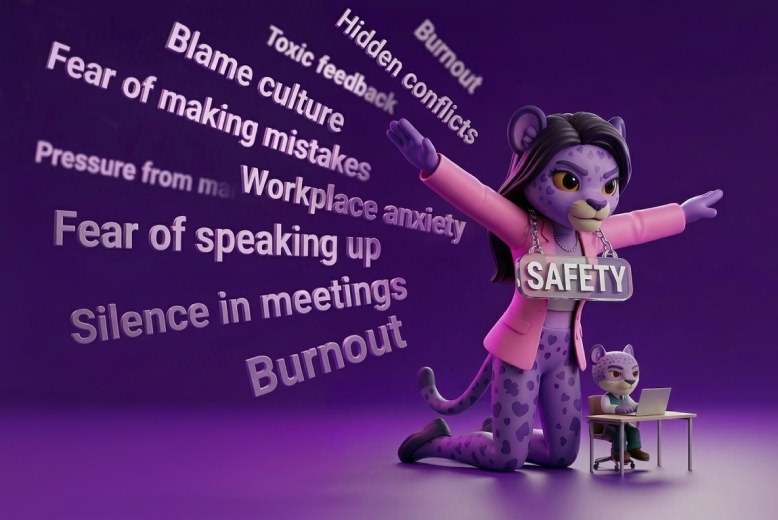
The concept, introduced by Harvard professor Amy Edmondson and reinforced by research such as Google’s Project Aristotle, highlights a simple idea: teams perform better when people are not afraid to contribute openly.
From an HR perspective, psychological safety is not just about comfort — it is about removing invisible barriers to performance. In practice, this means reducing fear-based management, creating fair and predictable feedback systems, encouraging transparency, and treating mistakes as learning opportunities rather than failures. At the same time, it does not eliminate accountability: the most effective teams combine psychological safety with high standards.
For employees, psychological safety is not defined by policies, but by everyday interactions. It is present when a developer can question a product decision without being dismissed, when a support agent can escalate a sensitive issue without fear, or when a manager openly trusts the expertise of strong specialists in the team and involves them in decision-making. In other words, psychological safety is not what is written in company values — it is what people actually experience in daily work.
The Business Impact of Psychological Safety
Psychological safety is not just a cultural principle — it is a measurable driver of business outcomes. Across multiple studies, it consistently shows a direct impact on motivation, retention, innovation, and overall team performance.
One of the strongest links is with innovation. A meta-analysis published in Advances in Economics, Business and Management Research demonstrates that psychological safety has a significant positive relationship with both employee innovation behavior and team-level innovation. In practical terms, this means that teams where people feel safe to speak up are more likely to generate ideas, experiment, and improve products — a critical factor in competitive industries.
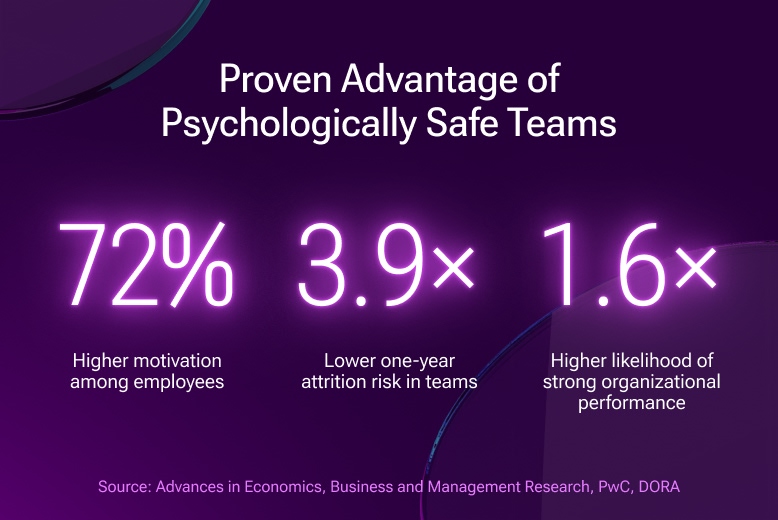
The effect on motivation is equally substantial. According to PwC, employees who report the highest levels of psychological safety are 72% more motivated than those who feel least safe. For businesses, this translates into higher engagement, stronger ownership, and better day-to-day performance without additional operational pressure.
Retention is another area where the impact is clearly measurable. Research by BCG shows that teams with high psychological safety have up to a 3.9× lower one-year attrition risk compared to those with low safety levels. Considering the cost of replacing skilled employees, this difference alone can have a significant financial impact.
In technical and product teams, psychological safety becomes especially important. Findings from DevOps Research and Assessment (DORA) suggest that across many performance metrics, organizational outcomes are often influenced more by team culture and the psychological environment than by purely technical factors. In other words, even highly skilled teams may struggle to reach their full potential if communication is limited by fear or lack of trust.
Specific Stress Factors in the iGaming Industry
In iGaming, psychological safety is not just a cultural advantage — it increasingly resembles a hygiene factor. The industry operates in a high-pressure environment, where teams are expected to deliver fast, adapt quickly, and respond to constant market and regulatory changes.
High Pace and Competitive Pressure
iGaming is a highly competitive and rapidly evolving industry. Market conditions shift quickly, and companies are expected to react in real time. This creates a working environment where teams must stay constantly focused, adaptive, and ready to respond.
For many professionals, this dynamic is part of the appeal. It offers opportunities to develop skills quickly, work with modern technologies, and contribute to fast-growing products. However, in environments where workload is not managed properly or pressure is reinforced through management practices, this intensity can quickly lead to burnout.
Yury Makarov, Head of Sales at EvenBet Gaming:
Our business development team probably feels the intensity of iGaming more than anyone else — constant travel, nonstop communication, very little downtime. In a different environment, that could easily turn into pressure. But when the team feels safe and supported, it becomes something else entirely: an ongoing, challenging, but genuinely exciting adventure.
Emotional Labor
iGaming can also be an emotionally demanding environment, particularly for employees in customer-facing roles such as support teams. These specialists regularly interact with users in highly emotional states, including frustration, stress, or excitement.
In some cases, they may also encounter signs of problematic behavior, which requires not only strong communication skills but also emotional resilience. Over time, this type of work creates additional strain, especially if there is no structured support from the company.
How iGaming Companies Build Psychological Safety in Practice
In recent years, iGaming companies have started to treat employee wellbeing — and by extension psychological safety — as a core part of their operating model, not just an HR initiative. The shift is visible across the industry: from isolated benefits to structured, system-level practices that support employees on a daily basis.
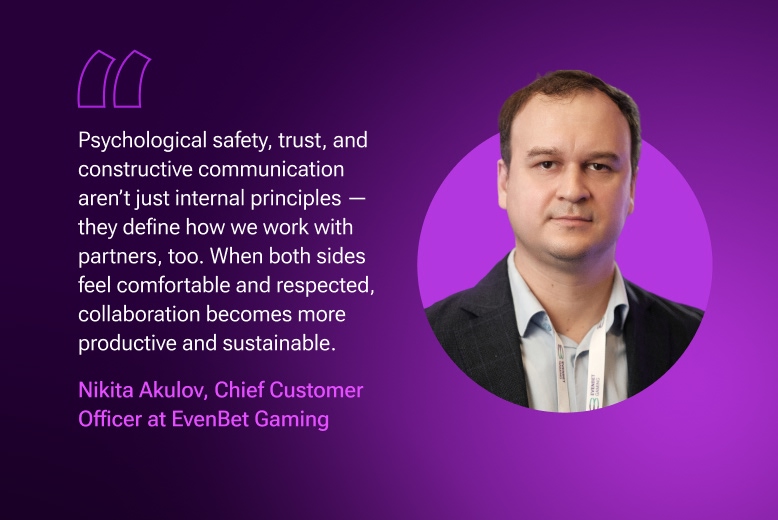
Nikita Akulov, Chief Customer Officer at EvenBet Gaming:
Psychological safety, trust, and constructive communication are not just internal guidelines — they reflect our core values. These standards should be consistent across all interactions, not only within teams but also in how we work with partners. This alignment is essential for building sustainable and trustworthy business relationships.
Flexible Work and Work-Life Balance
One of the most widespread practices is introducing flexible work models. Many iGaming companies offer hybrid formats, flexible hours, and autonomy in managing schedules, allowing employees to better balance professional and personal responsibilities.
This is not just about convenience. In a high-pressure environment with global teams and irregular workloads, flexibility helps reduce stress accumulation and gives employees a sense of control — a key component of psychological safety.
At the same time, simply communicating the importance of work-life balance to managers is rarely enough. Team leads are ultimately responsible for performance, delivery timelines, and business results — which can create an additional ethical tension if they are expected to both maximize output and limit workload.
At EvenBet Gaming, this balance is actively supported at the organizational level. If the team provides consistent and well-founded negative feedback about a manager, the situation is carefully reviewed. Ensuring psychological safety takes priority — and when leadership behavior conflicts with this principle, the company is prepared to take decisive action, including replacing the manager if necessary.
Access to Mental Health Support
Companies are increasingly providing structured mental health support, including:
- easy access to counseling and employee assistance programs
- platforms for stress and anxiety management
- early intervention systems for employees in need
These solutions are often tailored to different situations — from preventive support to assistance during crises — reflecting a move toward personalized care rather than one-size-fits-all programs.
At EvenBet Gaming, this approach is complemented by practical initiatives. The company hosts webinars with invited psychologists, where employees can receive professional advice on maintaining mental health and coping with stress. In addition, EvenBet provides partial compensation for mental health support, making professional help more accessible and reducing barriers to seeking it.
Tatiana Fursova, HR People Partner at EvenBet Gaming:
For us, mental health is a baseline, just like physical health. We provide compensation for medical services and wellness activities, and we see mental wellbeing as equally important. But the key point is prevention — we don’t believe support should start only when burnout happens. We want everyone in the team, from junior specialists to C-level leaders, to take care of their mental health proactively, and we make this support accessible to all.
Open Communication and Feedback Culture
Another key practice is building a culture where employees feel heard. This includes:
- regular wellbeing check-ins
- anonymous and open reporting channels
- internal programs that ensure employee voices reach leadership
For example, some companies implement “speak-up” systems or advocacy programs that connect employees directly with decision-makers. These mechanisms reduce the fear of raising concerns and help organizations identify risks earlier — a critical factor in both team performance and compliance.
At EvenBet Gaming, this principle is implemented through several structured practices. The company holds monthly Townhalls with CEO Dmitry Starostenkov, where, after sharing company updates, submitted questions are reviewed and discussed — including those sent anonymously through a dedicated form.
In addition, employees have continuous access to HR People Partners, whose role is to help resolve issues and mediate conflicts. Employees can report any cases of unethical or toxic behavior to HR, with the option to remain anonymous. Importantly, this applies to all levels of the organization — including direct managers — and employees are not expected to address the issue with the person involved before raising it.
At the same time, the company recognizes that psychological safety is not only about protection, but also about constructive dialogue. EvenBet conducts training sessions on how to give feedback, raise concerns, and challenge ideas in a professional and respectful way — ensuring that discussions remain focused on work, not personalities.
Training and Manager Enablement
Psychological safety does not emerge on its own — it is actively built through leadership behavior. That is why many companies invest in:
- mental health awareness training
- burnout prevention programs
- training managers to recognize and support employees in distress
At the same time, research shows that this area is still underdeveloped. According to Gallup, only 44% of managers have received any formal management training. Yet the impact of such training is significant: managers who have been trained show 22% higher engagement, and their teams demonstrate an 18% increase in engagement as well.
This highlights a key point: psychological safety at scale depends on how well managers are prepared for their role. Without the right skills, even well-intentioned leaders may unintentionally create pressure or communication barriers. With proper training, they become a critical driver of a healthier and more effective team environment.
Some organizations also introduce roles such as mental health first aiders or internal wellbeing champions who act as first points of contact within teams.
Inclusive Culture and Peer Support
Inclusion is another pillar of psychological safety. Leading iGaming companies create employee networks and communities that support different groups — from early-career professionals to underrepresented employees.
Peer-support initiatives, team-building activities, and internal communities help employees build trust and social connections, which are essential for a psychologically safe environment.
At EvenBet Gaming, inclusion is reinforced through a non-hierarchical communication culture. While directors and team leads have specific responsibilities related to team management, in everyday interaction they are treated as peers. The expectations for how to communicate — tone, openness, and mutual respect — are the same across all levels of the organization, which helps remove unnecessary barriers and makes communication more direct and accessible.
Konstantin Shelikhov, Senior Content Architect at EvenBet Gaming:
Back in the 2000s, when companies like Google started openly talking about employee-friendly cultures, it became a trend. Today, in industries like IT, marketing, or design, creating a comfortable and psychologically safe environment is almost expected. But in reality, not many companies truly achieve it. Behind things like office perks, free coffee, and declared openness, there is often still a sense of hierarchy and fear of speaking up.
At EvenBet Gaming, it feels different. Communication is genuinely barrier-free — even our CEO is accessible, whether in person or directly via messages. People don’t feel intimidated; they feel comfortable reaching out, having a conversation, or even just saying hello. That kind of openness is not something you see everywhere, and it makes a real difference in how the team experiences the workplace.
Psychological Safety Checklist: How to Assess Your Team
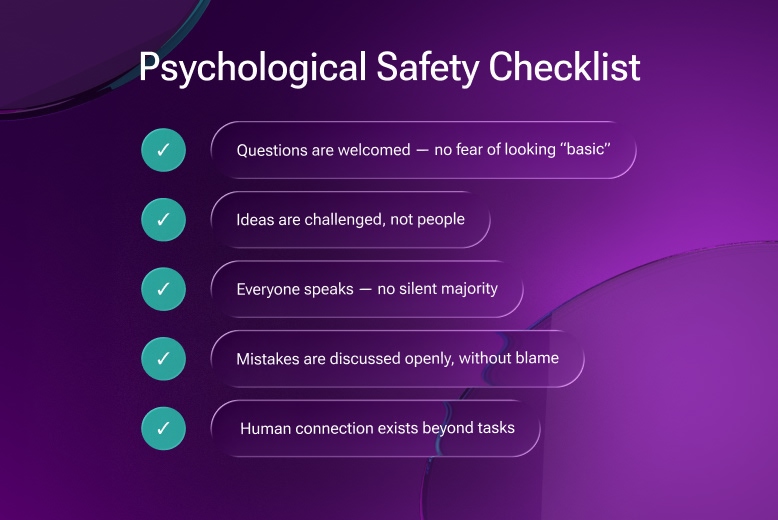
Psychological safety can be difficult to measure directly, but in practice it reveals itself through everyday team behaviors. The following checklist can help identify whether it is present — and where there is room for improvement.
- People are not afraid to ask questions. In psychologically safe teams, there is no fear of asking a “basic” or “obvious” question. Employees seek clarity to do their work better, not to protect their image. This creates an environment where knowledge is shared more openly and onboarding becomes faster and more effective.
- Discussions focus on ideas, not personalities. Healthy teams actively debate decisions, approaches, and strategies. These discussions can be intense, but they remain focused on the task — not on personal criticism. When disagreements do not turn into conflicts, teams can challenge assumptions without damaging trust.
- Everyone participates in conversations. Meetings are not dominated by a few voices. Leaders actively involve team members, and employees feel comfortable contributing. The absence of a “silent majority” is a strong indicator that people do not fear judgment or negative consequences.
- Mistakes can be acknowledged openly. Errors are treated as opportunities for learning, not as reasons for blame. When employees can openly admit a mistake or uncertainty, teams are able to identify issues earlier and improve processes more effectively.
- There is room for human connection. Communication is not limited strictly to tasks. Colleagues have a basic understanding of each other beyond work, which helps build trust and makes collaboration more natural.
This checklist is not a formal diagnostic tool, but it provides a practical starting point. If several of these signs are present, the team likely already has elements of psychological safety. If not, even small changes in communication practices and leadership behavior can become the first step toward building a more open and effective working environment.
FAQ: Psychological Safety in the Workplace
What is psychological safety in the workplace?
Psychological safety is a work environment where employees feel comfortable speaking up, asking questions, admitting mistakes, and sharing ideas without fear of negative consequences.
Why is psychological safety important in HR?
It removes barriers to performance, improves communication, and helps build trust within teams. For HR, it is a key factor in engagement, retention, and overall team effectiveness.
How does psychological safety impact employee performance?
It enables faster problem-solving, better decision-making, and higher levels of innovation. Employees spend less energy on self-protection and more on productive work.
What are examples of psychological safety at work?
Open discussions where ideas are challenged without personal criticism, the ability to admit mistakes without blame, active participation from all team members, and transparent communication across levels.
How can HR create psychological safety in teams?
By promoting open communication, training managers in constructive feedback, ensuring fair processes, providing mental health support, and creating safe channels for raising concerns.
How can psychological safety be measured?
Through employee surveys, feedback sessions, retention and engagement metrics, and by observing team behaviors such as participation in discussions, willingness to speak up, and openness in addressing mistakes.
Conclusion
Psychological safety is not a perk or a branding tool to attract talent — it is a strategic foundation for how a business operates. It directly influences how teams communicate, make decisions, handle risks, and adapt to change. In an industry like iGaming, where pressure, complexity, and speed are consistently high, its absence quickly translates into mistakes, disengagement, and turnover.
Conversely, companies that invest in psychological safety build more resilient teams, retain expertise, and create conditions for sustainable performance — making it a long-term competitive advantage rather than a short-term cultural initiative.